TEMPO.CO, Jakarta - Food security is no longer a sectoral issue confined to agriculture, but a global challenge affecting all nations.
Data from the Food and Agriculture Organization of the United Nations (FAO) show that around 637 million people worldwide face food shortages each year, particularly in the Asia-Pacific region. The figures underscore the scale and urgency of the crisis.
Ageng Setiawan Herianto, Assistant FAO Representative (Programme) in Indonesia, said the problem cannot be addressed solely by agricultural professionals.
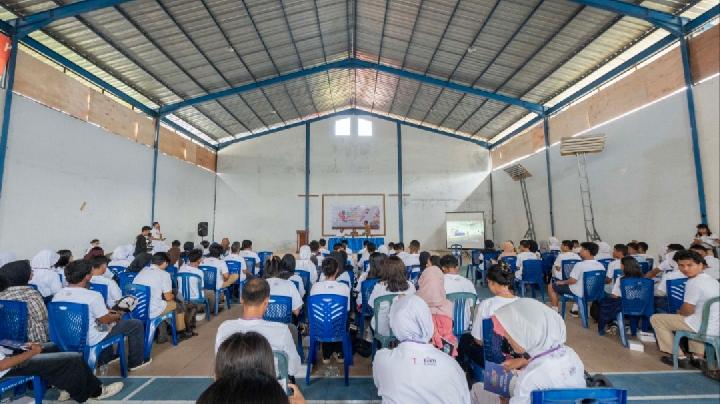
“Some 637 million people globally experience food shortages every year, especially in the Asia-Pacific region, and this challenge cannot be shouldered only by agricultural graduates,” Ageng said during an induction ceremony for 1,353 prospective graduates of bachelor’s and applied bachelor’s programs at Gadjah Mada University (UGM) on Tuesday, February 24, 2026.
Ageng stressed that food supply chains play a critical role in ensuring distribution and access to daily nutrition. As a result, the global food security agenda is shifting. While the focus once centered on feeding the world, it has now evolved toward nourishing the world.
“It is no longer enough to simply prevent hunger. We must ensure access to healthy, nutritious, and affordable food for all segments of society,” he said.
He explained that modern food systems aim to support healthy diets across the entire value chain, from production and processing to distribution and sustainable consumption. This broader approach opens the door to cross-disciplinary collaboration.
Multidisciplinary Solutions and Youth Involvement
Ageng highlighted agricultural digitalization as a key entry point for young professionals from diverse academic backgrounds. Engineering graduates can help improve supply chain efficiency.
Graduates in economics and business can strengthen financing models and market systems, while legal experts are needed to support regulatory frameworks and food policy.
Responding to questions about competencies required in the international arena, Ageng outlined three essential pillars for future leaders: innovation, policy awareness, and strong networks.
“First, think innovatively, because ideas matter. Second, understand policy in order to adapt effectively. Third, build wide networks,” he said.
He also emphasized integrity, commitment, and communication skills, including proficiency in foreign languages to ensure ideas are understood globally.
“Intelligence without communication skills makes it difficult to create broad, positive impact,” he said.
Degrees Mark the Beginning
Closing his remarks, Ageng reminded graduates that earning a degree marks the beginning, not the end, of social responsibility. Food security, he said, is a global priority that requires contributions across disciplines.
“From production to markets, from policy to digitalization, every graduate has a role to play. With innovation, commitment, and strong networks, UGM graduates are expected to become part of the solution in building a healthy and sustainable food system,” he said.
Read: Minister: BPJS Kesehatan Premium Hikes Won't Affect Low-Income Citizens
Click here to get the latest news updates from Tempo on Google New