
April 16, 2026 | 08:54 am

TEMPO.CO, Jakarta - Scientists have revealed that the Moon does not look the same from every place on Earth. Differences in perspective can cause the Moon's orientation to change quite drastically, both across regions and over time.
"How we see the Moon and Stars is all a matter of perspective," said Pamela Gay, a senior scientist at the Planetary Science Institute, cited from a report by Live Science, April 12, 2026.
According to astronomers, these differences not only cause the Moon's appearance to change from one location to another, but it can also appear to rotate from the time it rises to the time it sets in some regions.
For example, when the full moon is viewed from the North Pole, the Tycho crater will appear at the bottom of the Moon's surface. Conversely, from the South Pole, the same crater will be seen at the top.
Changes in orientation also occur in mid-latitude regions. Data from the Lunar and Planetary Institute shows that the Moon's orientation in Wellington, New Zealand, differs by about 97.1 degrees counter-clockwise compared to what is seen in Los Angeles. This difference is influenced by the latitude of each location.
In a simple illustration, an observer in the Northern Hemisphere may see the "man on the moon" pattern in an upright position. However, in the southern hemisphere, the same pattern may appear as a different shape. "moon is now a bunny jumping downward," Gay described the difference in perception.
However, all regions on Earth essentially see the same side of the Moon. This occurs because the moon rotates on its axis in the same time as its period of revolution around Earth, a phenomenon known as synchronous rotation.
Differences are also evident in the moon phases between the Northern and Southern Hemispheres. In the northern hemisphere, the changes in moon phases are observed to move from right to left, while in the southern hemisphere it is the opposite.
"This is a result of how the local horizon plane … is oriented relative to the positions of the Earth, moon and sun," said Catherine Miller, an observatory specialist at Mittelman Observatory, Middlebury College.
In the equatorial region, a more unique phenomenon occurs. When the Moon rises, its shape appears to expand vertically towards the full moon phase, so the crescent moon is often seen as a boat.
In addition, in many places, the Moon's orientation also appears to rotate throughout the night. In the equatorial region, these changes can even reach about 180 degrees. "Moon's face can rotate by roughly 180 degrees in an evening," Miller said.
However, this phenomenon is not because the moon is actually rotating, but it is the result of the observer's changing position while following the Moon's path in the sky. "It's all about how [the moon] follows that arc," said Gay.
These "rolling" phenomena decrease in high-latitude regions because the Moon does not pass directly over the head (zenith), so observers do not need to turn fully to follow it. Thus, the differences in the Moon's appearance in different parts of the world are mainly caused by the observer's perspective changing according to their geographical position.
Read: NASA: Artemis Astronauts 'Healthy and Happy' After Returning to Earth
Click here to get the latest news updates from Tempo on Google News
NASA: Artemis Astronauts 'Healthy and Happy' After Returning to Earth
4 hari lalu
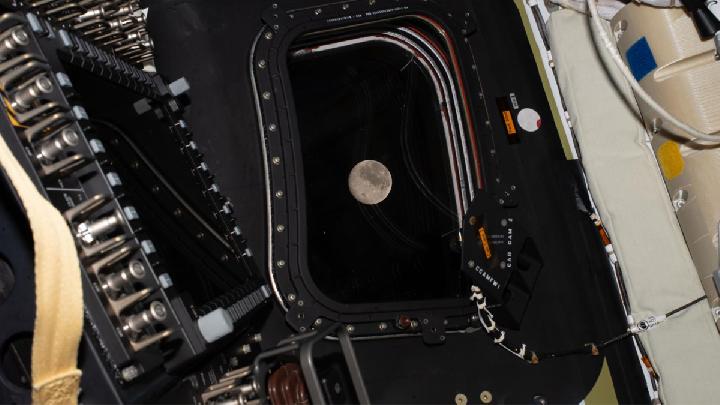
NASA officials celebrated the success of the Artemis II mission on Friday, April 11.
Artemis II Crew Returns to Earth, Splashes Down in Pacific
5 hari lalu

The four crew members of Artemis II are back on Earth after splashing down in the Pacific Ocean off the California coast.
Meet the 12 Astronauts Who Walked on the Moon
6 hari lalu

Discover the stories of the 12 astronauts who walked on the Moon, from Neil Armstrong's first steps to the final mission of Apollo 17.
Artemis II Crew Emotional as Mission Prepares for Reentry
6 hari lalu
Orion is set to splash down in the Pacific in less than 48 hours, with crew members saying the mission changed how they see the world.
Artemis II Breaks Record for Farthest Human Spaceflight
9 hari lalu
The astronauts on the Artemis II mission made history on Monday, reaching the farthest distance in space of any human.
Artemis II Passes Halfway Point to Moon, Sends Earth Photos
11 hari lalu
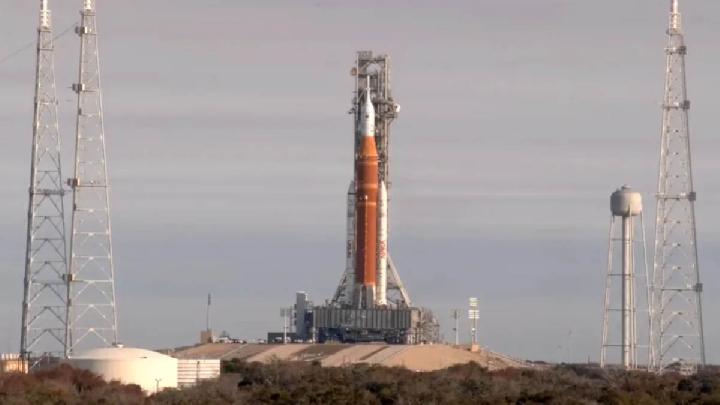
Artemis II is now closer to the Moon than the Earth. The astronauts on board have sent back eye-catching photos of our planet.
Artemis II Astronauts Leave Orbit, Rocket Towards Moon
13 hari lalu
Artemis II astronauts have officially begun their journey to the moon after conducting a successful thruster firing.
NASA Launches Artemis II Mission; Four Astronauts Orbit in "Great Spirits"
13 hari lalu
NASA officially launched the Artemis II mission on April 1, sending a historic four-person crew to orbit the Moon for the first time in over 50 years.
NASA Set to Launch Artemis 2, First Crewed Moon Mission Since 1972
15 hari lalu
After previously facing various technical problems, NASA now reports that preparations for the Artemis 2 moon mission are running smoothly.
BRIN: Pink Moon Visible Across Indonesia on Wednesday Night
16 hari lalu

Indonesian National Research and Innovation Agency (BRIN) says the public can witness the pink moon phenomenon on Wednesday night.