December 3, 2025 | 09:33 am

The research team of the Indonesian National Research and Innovation Agency (BRIN) has develop a way of detecting tuberculosis (TB) by using a colorimetric sensor to develop a rapid TB detection tool.
Ni Luh Wulan Septiani, a researcher in the team, stated that the colorimetric sensor possesses unique optical properties from silver nanoparticles, particularly triangular prism-shaped particles, with surface plasmon resonance (SPR) characteristics.
"This system works by inducing a color change when the biomarkers of the TB-causing bacteria are detected," said Ni Luh Wulan on BRIN's official website on Tuesday, December 2, 2025.
Materials with specific SPR can change color when their environment conditions change. Triangular-shaped silver nanoparticles have a blue color in a solution and are very sensitive. "If the environment changes, their shape can become round and the solution color turns yellow," said Ni Luh Wulan.
The properties of the nanoparticles were then modified. The research team attached specific TB receptors to the surface of triangular-shaped nanoparticles. When TB biomarkers are present in the sample, the receptors keep the particles in their triangular shape, and their color remains blue. On the other hand, when the sample does not contain TB, the particle shape changes and the color fades to yellow.
The blue color is interpreted as a positive sign of TB. "This color change happens very rapidly, within one to two minutes, making it possible to see whether the TB biomarkers are present or not," said Wulan.
During the testing process of the detection tool, the team used commercial protein sputum samples that were imported. Authentic sputum samples were obtained through collaboration with universities that have health facilities.
Through this research involving the Bandung Institute of Technology (ITB) and Airlangga University, BRIN researchers aim to complement the current standard TB detection procedure, which still relies on bacterial culture tests. This method is considered accurate but time-consuming. Meanwhile, the World Health Organization's recommendation for rapid detection within two hours based on molecular tests is still expensive.
The team seeks to offer the advantage of obtaining detection results within one minute. The results can be directly observed without the need for a complete laboratory, only requiring a small tube, a colorimeter device, and a smartphone. This simple detection method is considered ideal for community health centers and regional health services.
As the research is still in the laboratory stage, Wulan mentioned that it still needs to undergo accuracy testing, so there are no definitive figures yet. However, she is optimistic that the accuracy of this detection can compete with other rapid tests. The silver nanoparticle-based colorimetric TB sensor is targeted to become an early screening solution to help healthcare workers recognize TB more quickly.
Editor's Choice: Indonesia's BRIN Researchers Use Photonics and AI to Detect Plant Toxins
Click here to get the latest news updates from Tempo on Google News
Cyclone 95B Behind Malaysia Floods Expected to Make Landfall in Sumatra
7 hari lalu

A BRIN researcher said that if Tropical Cyclone 95B does make landfall in Sumatra, the impact of its strong winds will be tremendously destructive.
Two Tropical Storms Develop South of Indonesia. Why the Alert?
17 hari lalu
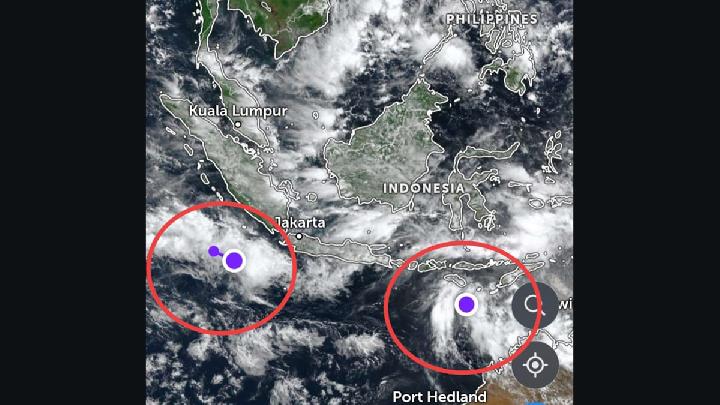
Tropical storm formations, which have the potential to develop into tropical cyclones, have been detected south of the Indonesian archipelago.
The BRIN Power Struggle
18 hari lalu

BRIN's problems are not just about mismanagement. The research agency needs a complete overhaul to end politicization.
Indonesia's BRIN Researchers Use Photonics and AI to Detect Plant Toxins
19 hari lalu

BRIN researchers have developed an innovation that uses light for various agricultural purposes, such as measuring seed hardness and visual detection.
Four Women Researchers Clinch L'Oral-UNESCO For Women in Science 2025 Award
21 hari lalu

Four women researchers were selected from among 150 applicants, the highest number in the past five years of the L'Oral-UNESCO For Women in Science program
BRIN Head Highlights Hefty Funding Required for Research
21 hari lalu

Arif Satria emphasizes the need for substantial funding for research and outlines alternative funding sources for BRIN.
Indonesia's BRIN Develops Active Materials for Next-Generation Batteries
21 hari lalu
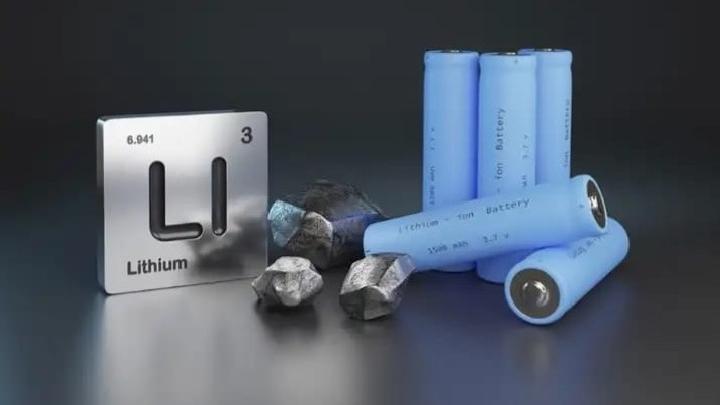
BRIN has developed new materials for next-generation batteries, advancing the country's role in global clean energy innovation.
New BRIN Head Vows to Oversee Prabowo's Priority Programs on Food, Energy
22 hari lalu

BRIN will also conduct national consolidation in research and innovation.
The Politics Behind the Push to Replace BRIN's Chief
22 hari lalu

BRIN's Steering Committee Chair Megawati Soekarnoputri faces pressure to propose replacing the agency chief. Is political interest at play?
Five Indonesian Scientists Awarded the 2025 Habibie Prize
22 hari lalu
BRIN continues to uphold the tradition of honoring scientists. In 2025, the Habibie Prize was awarded to five national scientists from five fields of study.