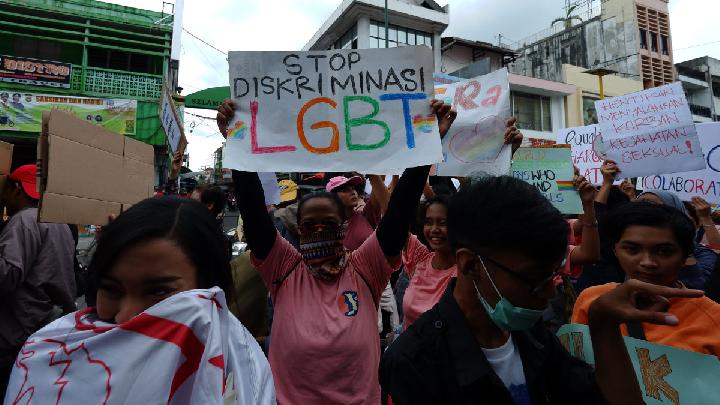
The government classifies LGBTQ individuals as a non-military threat, accommodating the majority’s prejudice.
THE government is muddling the logic of defense policy by classifying lesbian, gay, bisexual, transgender, and queer (LGBTQ) culture as a non-military threat. The regulation conflates the moral views of the majority with threats to the state.
The controversial provision, contained in the Presidential Regulation on the 2025-2029 General State Defense Policy issued last year, has recently resurfaced. The renewed LGBTQ debate came as the government faces mounting pressure from a worsening economy, rising fuel prices, and increasing costs of basic necessities. The re-emergence of such a sensitive issue amid growing public anxiety deserves to be dissected further.
Any threat to the state should be assessed based on its capacity and impact. Terrorism threatens lives through violence. Cyberattacks can cripple national infrastructure. Drug trafficking involves organized criminal networks and harms societies. Separatism threatens territorial integrity. But what capacity does LGBTQ have against national sovereignty, territorial integrity, or national security? This logic is difficult to comprehend.
Rather than offering measurable assessments, the government is exploiting the vague term “LGBTQ culture.” It remains unclear what constitutes as dangerous: the existence of people with certain sexual orientations and gender identities, their expression, or their efforts to obtain equal rights? The consequences of this ambiguity could be far-reaching. Media outlets reporting on LGBTQ issues or civil society organizations advocating for minority rights could also be accused of promoting “LGBTQ culture.”
There is no doubt that the majority of Indonesians still hold conservative views toward LGBTQ people. Many reject them on religious and moral grounds. The state needs to understand this social reality, and not seek to transform the majority opinion into national defense doctrine. Majority disapproval does not automatically make a minority group a threat to the state.
It becomes clear to see how government policies are serving as a political accommodation to conservative groups. Discrimination against LGBTQ+ people is likely to receive broad public approval with almost no electoral risk. In a time of widespread concern over a weakened economy, corruption, inequality, and poor public services, aligning with the views of the majority becomes an easy way for the government to signal that it is listening to public sentiments.
Such discrimination has long been institutionalized. In 2023, Arus Pelangi documented at least 45 discriminatory regulations against LGBTQ community, many of which were local ordinances. Instead of reviewing or repealing these regulations, the central government is reinforcing them by adding LGBTQ to its list of non-military threats. Consequently, and to no one’s surprise, the Indonesian Ulema Council (MUI) is now citing the presidential regulation to justify its opposition to LGBTQ behavior and campaigns, advocating for their criminalization.
Labeling LGBTQ as a non-military threat transforms social prejudice into an official state policy. If the majority opinion is used as the basis for defining threats, its boundaries become increasingly malleable. Today, it is LGBTQ people. In the future, religious minorities, followers of particular beliefs, or any other social group that differs from dominant societal values could be given the same label.
For the government, portraying a minority group that has already been constrained by decades of discriminatory regulations as a threat may be easier than addressing the public’s genuine concerns. But this is precisely where the logic breaks down, and where the irony lies. How can a group that has long been the target of discrimination and intimidation suddenly be labeled as threatening?
Indonesia Denies State-Decreed LGBTQ Discrimination: What's the Truth?
4 hari lalu
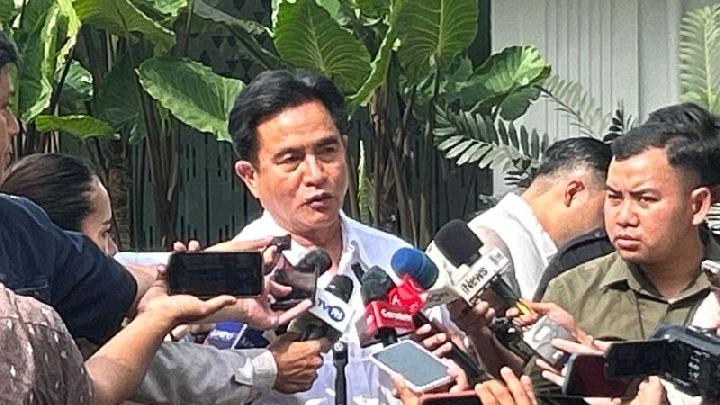
Indonesia's anti-LGBTQ regulation sparked controversy. The government denies discriminating the minority group, but Amnesty doesn't buy it.
What Minister Yusril Says About the Proposed LGBT-Related Bill
5 hari lalu
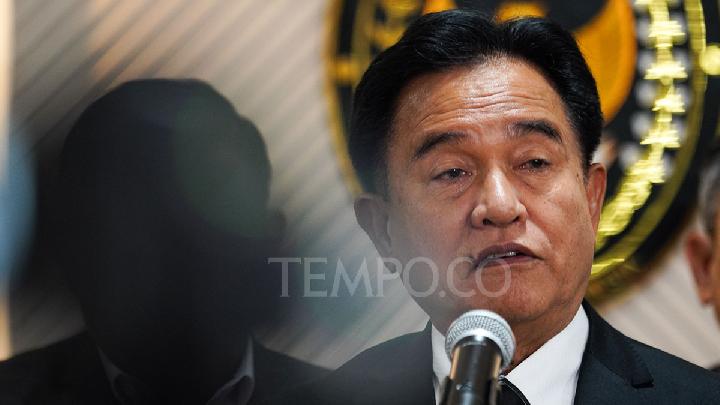
MUI's legal and legislative team is currently discussing the types of sanctions that will be included in the draft law on LGBT issues.
Indonesia Mulls Anti-LGBTQ Curriculum in Religious Education
7 hari lalu
The Ministry of Religious Affairs plans to include anti-dissemination of LGBTQ culture in the religious education curriculum.
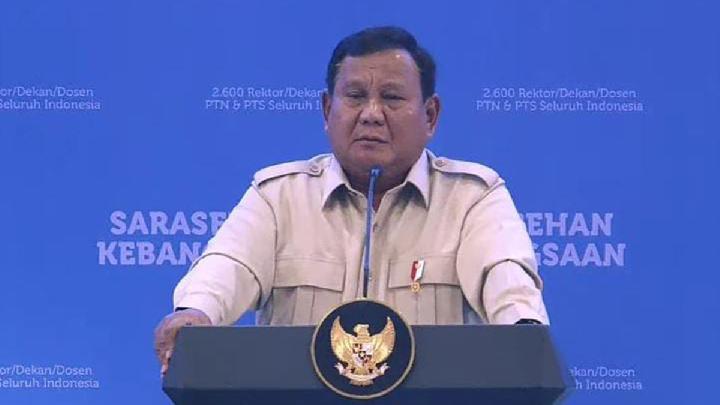
Lawmaker Backs Prabowo's LGBTQ Non-Military Threat Classification
7 hari lalu
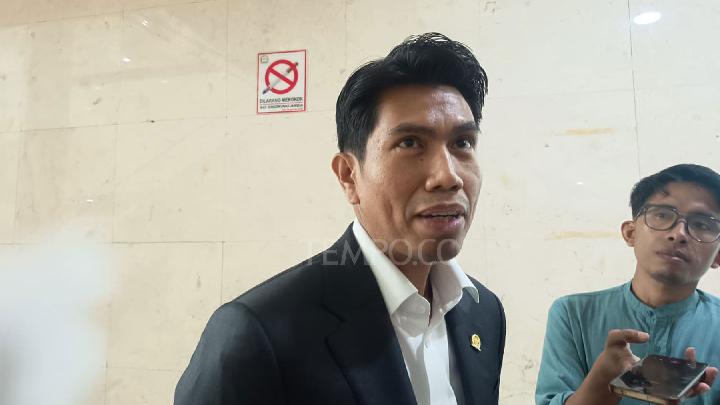
A Gerindra Party official said Prabowo has shown firmness as head of state in addressing what he described as the spread of LGBTQ culture.
Why University of Indonesia Distances Itself from Students' LGBT Review
9 hari lalu

The University of Indonesia said the study review was posted from an academic perspective, instead of promoting "a lifestyle."
World Cup: 'Pride Match' Sparks Objections in Egypt and Iran
18 hari lalu
Friday night's game in Seattle was designated as a "Pride Match" well ahead of the World Cup draw.
Pride Month Post by SUMA UI Spotlights Discrimination, Persecution
31 hari lalu
A post made by SUMA UI during Pride Month highlights the discrimination and persecution faced by some LGBTQ+ communities in Indonesia, including on campus.
Fact Check: CIA Never Ranked Indonesia 5th in Global LGBT Population
18 April 2026
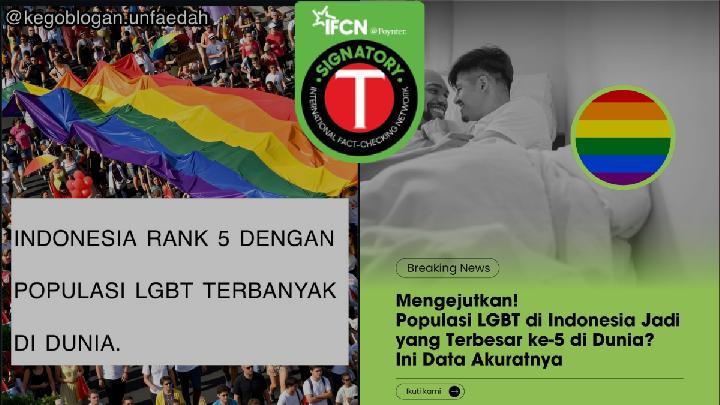
The narrative claims that in 2015, the CIA released data stating that about 3% of Indonesia's population-around 7.5 million people-are LGBT.
Investigation Underway into Charlie Kirk Murder Suspect's Roommate
15 September 2025

Authorities are investigating Tyler Robinson's roommate, a suspect in the murder of Charlie Kirk, to determine the motive.
Indonesian Police Arrest 75 Members of LGBT Community in Puncak Villa
26 Juni 2025

The police said that the LGBT community used the guise of a family gathering to avoid detection by authorities.