TEMPO.CO, Jakarta - Iran is considering imposing fees on submarine internet cables passing through the Strait of Hormuz, in what analysts see as a new strategy to increase pressure on the West and strengthen Tehran’s geopolitical leverage after the recent conflict in the Gulf region.
As reported by CNN, Iran’s Revolutionary Guards-linked media outlets and several lawmakers have floated plans to charge international technology companies and cable operators for the use of subsea fiber-optic cables laid beneath the strategic waterway. Tehran has also hinted at tighter control over digital traffic flowing through the strait.
“We will impose fees on internet cables,” Iranian military spokesperson Ebrahim Zolfaghari wrote on X last week.
The proposal emerged after Iran claimed success in using the Strait of Hormuz as leverage during wartime disruptions earlier this year. Tehran is now seeking to expand that leverage beyond oil shipments into global digital infrastructure.
IRGC-linked Tasnim News Agency argued that the strait’s role in international internet connectivity could generate billions of dollars in revenue for Iran. Mostafa Taheri, a member of Iran’s parliamentary Industries Commission, estimated potential earnings from cable transit fees could reach US$15 billion.
According to Euro News, Iranian media proposed requiring global technology companies such as Google, Microsoft, Meta, and Amazon to comply with Iranian regulations if their infrastructure uses cables crossing the Strait of Hormuz.
The reports also suggested that submarine cable operators would be required to pay licensing fees and rely on Iranian firms for maintenance and repair work.
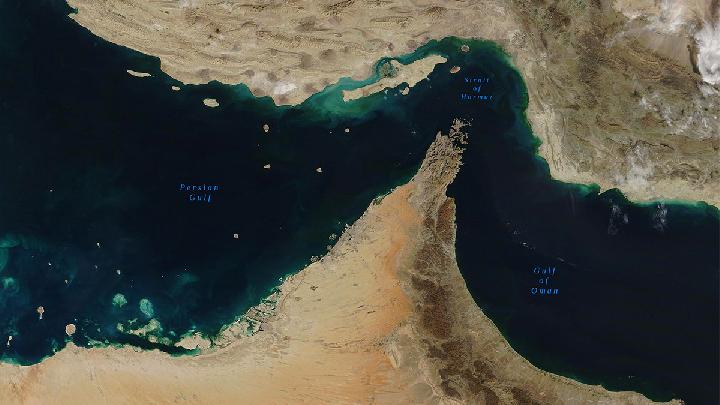
Several major subsea cables connecting Asia, Europe, and the Middle East pass through the Strait of Hormuz and the Persian Gulf. These include the FALCON and Gulf Bridge International systems, which carry financial transactions, cloud services, and internet traffic between continents.
Submarine cables form the backbone of global internet connectivity. According to experts cited by CNN, targeting or disrupting them could affect banking systems, military communications, AI cloud infrastructure, streaming services, and international financial transactions.
Although Iran has not explicitly threatened to sabotage the cables, state-linked media outlets have issued veiled warnings that disruptions could occur if Tehran’s demands are ignored.
Middle East analyst Dina Esfandiary of Bloomberg Economics said Iran aims to demonstrate that attacking the country would carry enormous costs for the global economy.
“It aims to impose such a hefty cost on the global economy that no-one will dare attack Iran again,” she said.
Researchers say the threat is particularly significant because several cables run close to Iranian territorial waters. Alan Mauldin, research director at telecom research firm TeleGeography, noted that at least two cable systems traverse Iranian waters.
Security analysts warned that Iran’s Islamic Revolutionary Guard Corps possesses capabilities that could threaten underwater infrastructure, including combat divers, small submarines, and underwater drones.
Mostafa Ahmed, a senior researcher at the UAE-based Habtoor Research Center, warned that any large-scale attack on the cables could trigger a “digital catastrophe” affecting multiple regions.
Countries in the Gulf could face severe internet disruptions, while India’s outsourcing industry and financial systems linking Europe and Asia could also be affected. Parts of East Africa may experience internet blackouts if major cables are damaged.
However, TeleGeography estimates that cables crossing the Strait of Hormuz account for less than 1 percent of global international bandwidth as of 2025, meaning operators may still reroute traffic through alternative routes.
Iranian media outlets argued that the proposal is consistent with the United Nations Convention on the Law of the Sea (UNCLOS), claiming coastal states have the right to regulate cables passing through territorial waters.
Still, legal experts questioned Tehran’s interpretation. International law professor Irini Papanicolopulu of SOAS University of London told CNN that while countries may impose conditions on new cables entering their territorial seas, existing agreements remain legally binding.
The proposal also comes as Tehran faces criticism over internet restrictions at home. Euro News reported that Iran has maintained extensive internet blackouts for months following protests and the conflict involving the United States and Israel.
Internet watchdog NetBlocks said the nationwide disruption had entered its 76th day this week, severely affecting businesses and online access across the country.
Iran’s Communications Minister previously acknowledged that around 10 million Iranians rely on stable internet access for their livelihoods, while the shutdown has reportedly caused economic losses worth hundreds of billions of tomans daily.
The Strait of Hormuz remains one of the world’s most strategic chokepoints, with roughly one-fifth of global oil and liquefied natural gas shipments normally passing through the narrow waterway separating Iran and Oman.
Read: Middle East: Trump Warns Iran 'Time is Ticking' on Deal
Click here to get the latest news updates from Tempo on Google News
Rupiah Weakens After Xi Jinping-Trump Talks Fail to Ease Iran Tensions
1 jam lalu
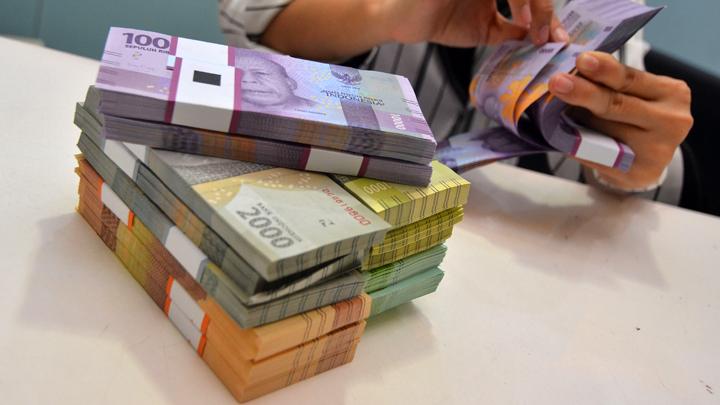
The rupiah exchange rate weakened 33 points, or 0.19 percent, to Rp17,630 per US dollar on Monday morning.
Netanyahu's 'Secret Visit' Sparks Tension With UAE
2 jam lalu

The alliance between Israel and the UAE is showing signs of strain after Netanyahu publicly disclosed what he described as a "secret visit" to the UAE
Cuba Buys More Than 300 Drones from Russia and Iran, Report Says
5 jam lalu
Cuba has also discussed plans to use drones to attack US targets such as the naval base at Guantanamo Bay, according to Axios news outlet.
Middle East: Trump Warns Iran 'Time is Ticking' on Deal
5 jam lalu
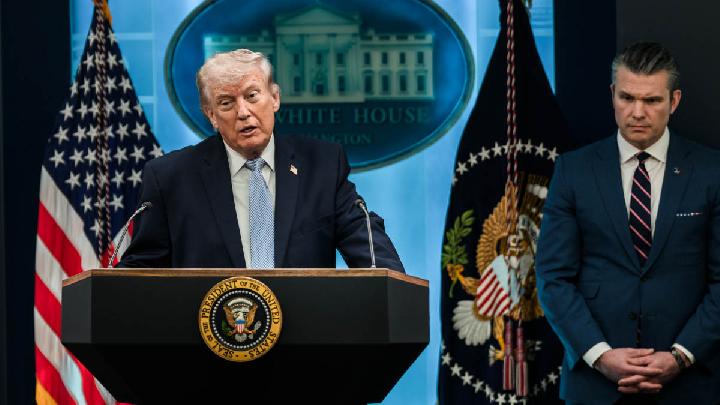
US President Donald Trump has again warned Iran to immediately agree to Washington's proposed deal to end the ongoing conflict
Today's Top 3 News: Prabowo Says Villagers Don't Use Dollars, Rupiah Could Hit Rp18,000 by May's End
19 jam lalu

Here is the list of the top 3 news on Tempo English today.
China, US, Israel Compete in Fast-Growing Laser Weapons Race
1 hari lalu

Gulf states are deploying laser weapons against drones in the Iran war, with Israel lending systems to the UAE. But are they effective?
Fact Check: Are Downpours in Iran Tied to Damaged US Radar Systems?
1 hari lalu
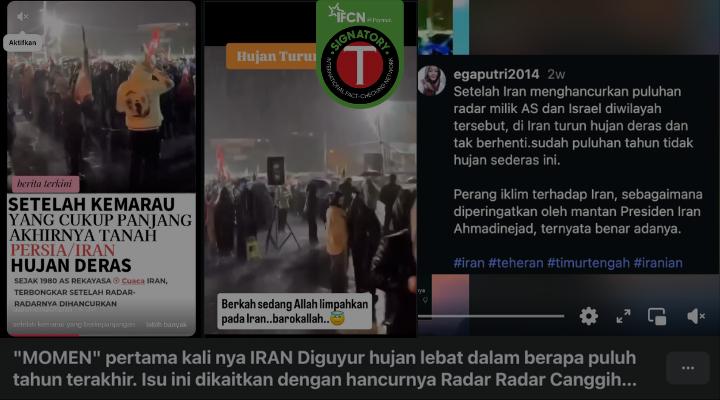
Fact check - Heavy rains and snowfall across Iran are caused by climate change and not tied to damage to US or Israeli radar systems.
Trump Weighs Lifting Sanctions on Chinese Firms Buying Iranian Oil
2 hari lalu

Trump also commented on Iran's proposals for further talks with the United States, saying they were unacceptable to Washington.
Iran, Russia Foreign Ministers Discuss Tehran's Nuclear Program in New Delhi
2 hari lalu
Iran and Russia's Foreign Ministers exchanged views on the latest developments in West Asia and negotiations on the Iranian nuclear issue.
Israel Signs $34 Million Deal to Develop Fighter Jet
2 hari lalu

Israel has signed a contract worth over US$34 million to enhance the long-range capabilities of the F-35 Adir fighter jet amidst tensions with Iran.