
April 21, 2026 | 02:33 pm

TEMPO.CO, Jakarta - The Indonesian Health Ministry will expand the coverage of human papillomavirus (HPV) vaccination to include males starting this year. This strategic move aims to curb the transmission of the virus responsible for cervical cancer.
According to Health Minister Budi Gunadi Sadikin, the vaccine program has exclusively focused on females thus far. However, he noted that males play a critical role as carriers of the virus, which can then be transmitted to women.
"Women are most affected as they can develop cervical cancer, but the transmission can come from males," Budi stated during a working session with Commission IX of the House of Representatives at the Parliament Building in Jakarta on Monday, April 20, 2026.
Budi explained that the national HPV vaccination initiative is designed to lower the incidence of cervical cancer, which remains a leading cause of mortality among Indonesian women. Therefore, the program initially targeted school-age girls, specifically those aged 10-11, before expanding to include adolescents.
While cervical cancer specifically affects women, Budi maintained that an approach targeting only one gender is insufficient. Drawing on global benchmarks, he noted that the HPV vaccine is far more effective at breaking the chain of transmission when administered to both males and females.
"If only females are vaccinated, the burden of protection remains one-sided. In many countries, providing the HPV vaccine to both males and females has proven more effective in reducing transmission," Budi remarked.
Furthermore, extending the vaccine to males is expected to bolster public acceptance of the immunization program. Budi cited international evidence suggesting that women are more likely to embrace the vaccination when males are equally involved in the effort.
Budi urged the public to cast aside any hesitation or fear regarding the vaccine. He emphasized that vaccination stands as one of the most effective and cost-efficient preventive health interventions for reducing disease and mortality rates. "Evidence from various nations shows that widespread HPV vaccination can significantly reduce cervical cancer cases," he concluded.
Read: Don't Normalize It: How Parents Should Respond to Kids' Sexist Jokes
Click here to get the latest news updates from Tempo on Google News
Fact Check: Claim That HPV Vaccine Endangers Children is False
50 hari lalu

Fact check - The HPV vaccine is intended to protect children from cancer, not to endanger their lives.
Fact Check: Cancer Cure Not Linked to US-WHO Exit
51 hari lalu
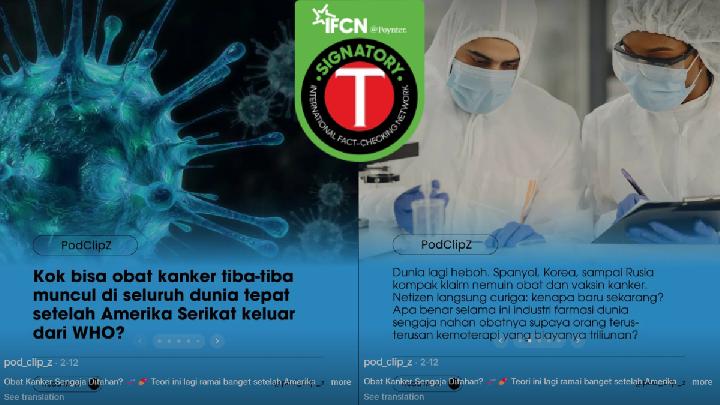
Fact check - There is no link between the discovery of cancer treatments and vaccines and the US leaving the WHO.
Preventing and Treating Cervical, Vulvar, and Vaginal Cancers: What You Need to Know
10 September 2025

Article discussing the prevention and treatment of vulvar and vaginal cancers, including HPV vaccination, regular screening, and medical care.
Health Ministry Denies Rumor That HPV Vaccine Causes Infertility
12 Oktober 2023

The Indonesian Health Ministry denies rumors that the HPV vaccine can cause infertility in women.
Health Ministry Clarifies on HPV Vaccine Misinformation
10 Oktober 2023

The Indonesian Ministry of Health clarifies the misinformation spread in regard to the Human Papillomavirus or HPV vaccine.
Bio Farma, MSD to Launch NusaGard Cervix Cancer Vaccines in Indonesia
2 Agustus 2023

Bio Farma collaborates with MSD to launch NusaGard vaccines, the domestically produced human papillomavirus (HPV) vaccine.
Bio Farma and MSD Partner Up in Local HPV Vaccine Production
15 Mei 2023

Bio Farma received the technical vision from Merck Sharp Dohme (MSD) in the development of locally-produced Human Papillomavirus (HPV) vaccine.
Common Cancers in Women and How to Prevent Them
8 Februari 2023

Cancer is a serious disease and is not gender specific. Some of them, however, often affect women and cause significant impacts on life quality.
Indonesia Rolling Out HPV Vaccines for Children Age 11 to 12
1 Februari 2023

Indonesia is rolling out Human Papillomavirus or HPV vaccines to be administered to all children aged 11 to 12.