November 11, 2025 | 06:48 am

By Shraman Bannerjee, Shiv Nadar University, Delhi NCR.
On Monday, Prime Minister Narendra Modi launched a Rs 1 lakh crore (US $1.13 billion) Research, Development and Innovation fund to catalyse private sector participation in high-impact R&D. Such projects are also often high-risk, and struggle to attract traditional funding. The fund’s aim is to strengthen India’s capabilities in strategic technologies and promote technological self-reliance.
Global supply chains have been unsettled by the actions of US President Donald Trump on more than 90 countries, but for India — despite being hit by 50 percent tariffs — this need not be an enduring setback. It can, in fact, be an opening.
Tariff walls that restrict global supply chains also create gaps that nimble economies can fill. For India, the way forward is not to shy away from uncertainty but to embrace it through bold experimentation in technology and industrial policy.
This is where the lessons of research on strategic experimentation become crucial.
A recent paper by researchers at Shiv Nadar University including this author examined how decision-makers choose between safe, predictable options and risky, uncertain ones that carry the promise of much higher returns. The “safe arm” provides steady but limited gains, while the “risky arm” may lead to costly failures, or to breakthroughs that permanently raise payoffs.
What matters is not just the outcome of today’s choice, but the knowledge it generates for tomorrow. By experimenting, actors learn about the true state of the world; by avoiding risk, they remain in the dark. The paradox is that even apparent failures can be productive, because they update our beliefs and sharpen future decisions.
This framework, often called strategic experimentation in economics, helps explain why bold risk-taking can be rational even in uncertain environments. This logic is directly relevant to India’s present crossroads.
Should we build domestic semiconductor fabrication units or “fabs”, knowing some may falter? Should we allow artificial intelligence (AI) startups to test applications aggressively, even if regulations must later adjust? Should we bet on electric vehicles despite current bottlenecks in charging networks and costs?
Not experimenting may be costlier
Each of these is a risky path — but one that generates information, skills, and institutional learning. In a world where geopolitical rivalries disrupt supply chains, the cost of not experimenting may be greater than the cost of failed experiments.
India’s own history bears out this truth. Universal suffrage at independence was itself an audacious experiment for the country, as was its early engagement with planning and non-alignment — an act of faith in democratic participation and self-reliance at a time when much of the world doubted that either could thrive in a poor, newly decolonised nation. Extending the vote to every adult, regardless of literacy or wealth, was a political gamble on mass participation.
Non-alignment, too, was a strategic gamble — choosing independence of judgment over the security and aid that came with joining either superpower bloc. Not every gamble succeeded, but each attempt shaped institutions and capacities that endure. Today, our tryst with the future demands a similar willingness to learn by doing.
The danger is that failures are visible while the knowledge they produce is invisible. A semiconductor fab that struggles or an electric vehicle (EV) subsidy that overshoots budgets attracts criticism. But less obvious are the foregone benefits of never trying at all — the engineers who were never trained, the supply chains never developed, the regulatory frameworks never stress-tested.
Recent research at Shiv Nadar University and the broader economics literature on strategic experimentation shows that these ‘invisible costs of caution’—the opportunities lost by not taking risks—can outweigh the costs of failure.
What does this mean for policy? It means India must treat experimentation not as an accident but as strategy. Regulatory sandboxes that allow AI applications to be tested in controlled settings; mission-driven semiconductor projects that tolerate some waste in exchange for capability-building; innovation zones where startups can fail without stigma — these are not indulgences, but investments in learning. The question for policymakers is not whether every project will succeed. It is whether each project leaves behind knowledge that makes the next attempt more likely to succeed.
Trump’s tariffs make this reality starker. As global trade fragments, nations are being pushed to localise production in strategic sectors, a shift highlighted in recent IMF World Economic Outlook and WTO Global Trade Outlook reports. India has a chance to step into this breach — but only if it is willing to shoulder uncertainty and accept missteps along the way. The semiconductor race, the push for AI, the EV transition: none will follow a straight line. The winners of this century will not be those who avoid mistakes, but those who learn fastest from them.
To succeed, India must reframe what it means for policy to “work.” Short-term outcomes matter, but so does long-term knowledge accumulation. Each failed attempt is tuition for the next success. Risk-aversion may win applause in the moment, but it leaves us unprepared for the shocks and opportunities of an unstable global order.
If the twentieth century was India’s tryst with destiny, the twenty-first must be our tryst with experimentation. The question is not whether India can avoid uncertainty – it cannot. The question is whether we can harness it to leap ahead.
Originally published under Creative Commons by 360info™.
*) DISCLAIMER
Articles published in the “Your Views & Stories” section of en.tempo.co website are personal opinions written by third parties, and cannot be related or attributed to en.tempo.co’s official stance.
India: Car Explodes in New Delhi, Killing Several People
8 jam lalu

Police confirmed there were fatalities from a car explosion near a metro station close to the Red Fort landmark.
Dealing with Quotas in India's Private Universities
1 hari lalu

The Indian government must devise strong educational mechanisms to help students from underprivileged backgrounds to compete in private universities.
Why India's Garlic Butter Naan Is the World's Best Bread
4 hari lalu

TasteAtlas unveiled its list of the 100 Best Breads in the World, and India's garlic butter naan claimed the top spot.
10 Light Festivals Around the World, from Paris to India
4 hari lalu

Ten world light festivals from Aomori Nebuta Matsuri in Japan to i Light Marina Bay in Singapore offer captivating lanterns, lasers, and art installations, worthy of being on travellers' bucket lists.
India's Farm Policies Behind Bad Air, Unhealthy Diet, Water Crisis
6 hari lalu

Law and policy measures that prioritise sustainable agriculture are needed to address India's environmental challenges.
Blood Clots: India's Silent, Preventable Killer
8 hari lalu

Heart disease and stroke dominate India's health statistics - but this hidden culprit links many of these deaths.
Trump, Xi Agree to Pause Trade War as China Eases Rare Earth Export Curbs
11 hari lalu
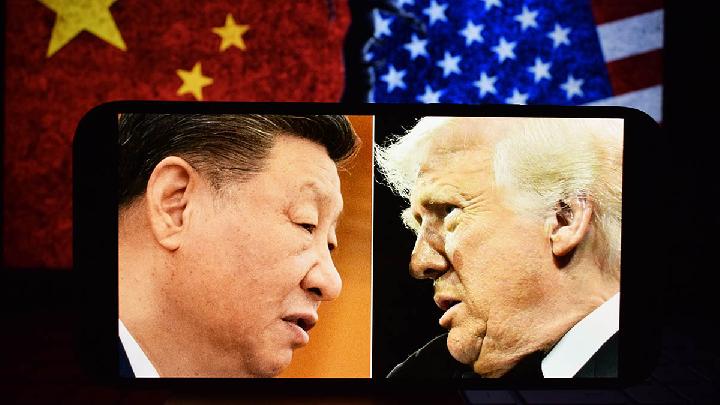
At the APEC Summit in Busan, their first meeting since 2019, Trump and Xi signed a one-year deal for China to lift rare earth export limits to the US.
India to Provide Technical Assistance for Indonesia's Free Nutritious Meal Program
11 hari lalu
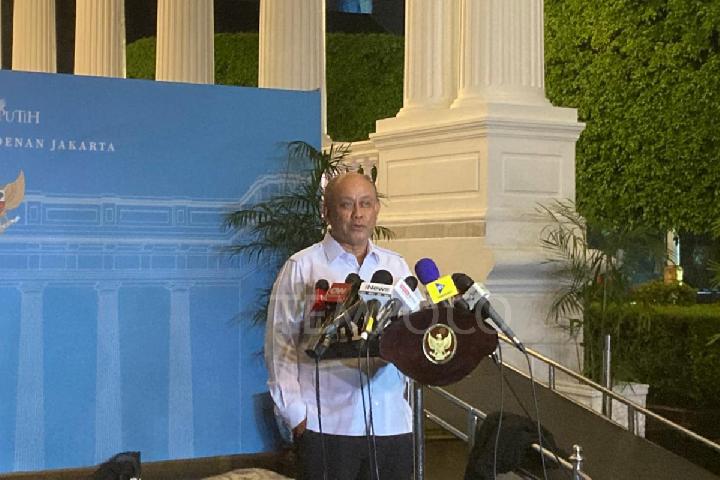
Head of BGN, Dadan Hindayana, stated that India will provide technical guidance for free nutritious meals in Indonesia to improve service quality.
India to Repatriate 500 Citizens from Thailand After Myanmar Scam Hub Raid
12 hari lalu
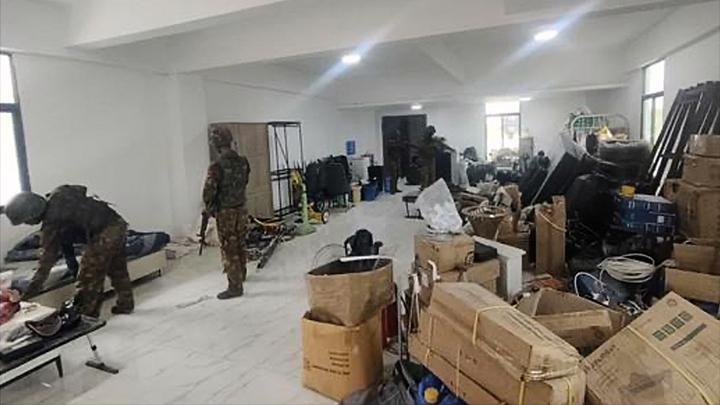
India will repatriate 500 of its citizens from Thailand following a raid by the Myanmar military on a notorious scam hub within its territory.
Why Educational Inequality Remains High in India
13 hari lalu

If the investment in human capital is unequally distributed, there is no way that India can ensure a reduction in overall inequality.