
TEMPO.CO, Jakarta - Recent observation using the James Webb Space Telescope confirms that the "city-killer" asteroid or 2024 YR4 will not collide with Earth or the Moon as it passes by in 2032.
Based on data collected on February 18 and 26 using the infrared instrument of the telescope, astronomers from the United States' National Aeronautics and Space Administration (NASA) updated their calculations for the near-Earth asteroid's trajectory. As a result, the likelihood of the asteroid colliding with the Moon, previously estimated at 4.3 percent, has now decreased to zero.
Although it will not collide, the asteroid is expected to pass relatively close to the Moon, at a distance of about 13,200 miles or 21,200 kilometers from the lunar surface. This distance is even closer than some artificial satellites orbiting the Earth. Meanwhile, Asteroid 2024 YR4 is also confirmed to pass far from Earth when it re-enters the inner solar system at its closest approach in about six years.
NASA stated that this observation was made possible thanks to the high sensitivity of the James Webb telescope, although it also pushed the telescope's capabilities to their limits.
"Since spring of 2025, the asteroid has been unobservable from both Earth and space-based observatories except for this use of Webb," a NASA official said in a written statement quoted from a report by Live Science, March 5, 2026. They added that this recent observation is among "the faintest ever observations of an asteroid" in history.
Asteroid 2024 YR4 was first discovered in late 2024 by the Asteroid Terrestrial-impact Last Alert System (ATLAS) network. Subsequent observations indicated that the asteroid has a diameter of about 53 to 67 meters, roughly equivalent to the height of the Leaning Tower of Pisa in Italy.
With this size, the asteroid has been dubbed a "city killer" because if it were to collide with Earth, it could produce an energy equivalent to hundreds of atomic bombs dropped on Hiroshima and potentially destroy a city.
At the beginning of the observations, astronomers initially estimated a small chance of the asteroid colliding with Earth. The collision probability even reached 3.1 percent, which was noted as one of the highest probabilities for asteroid collision ever calculated. However, after additional data from JWST and other telescopes was analyzed, the probability was eventually confirmed to be zero.
Although the threat of a collision has been ruled out, Asteroid 2024 YR4 remains an important object for astronomers to study planetary defense models. NASA also plans to observe the asteroid again using JWST in 2028 when it approaches Earth once more.
Read: Meet 2025 PN7, the Tiny Asteroid Traveling with Earth Like a Second Moon
Click here to get the latest news updates from Tempo on Google News
IAU Names Asteroid After Indonesian Scientist Bayu Risanto
48 hari lalu

This international recognition honors Indonesian Jesuit priest and scientist Bayu Risanto's contributions to meteorology and atmospheric science.
Meet 2025 PN7, the Tiny Asteroid Traveling with Earth Like a Second Moon
24 Oktober 2025

Asteroid 2025 PN7, which was recently discovered, turns out to be a quasi-moon, an object that orbits close to the Earth. It is expected to stay until 2083.
China Gears Up for Tianwen-2 Mission to Asteroid and Comet
26 Mei 2025
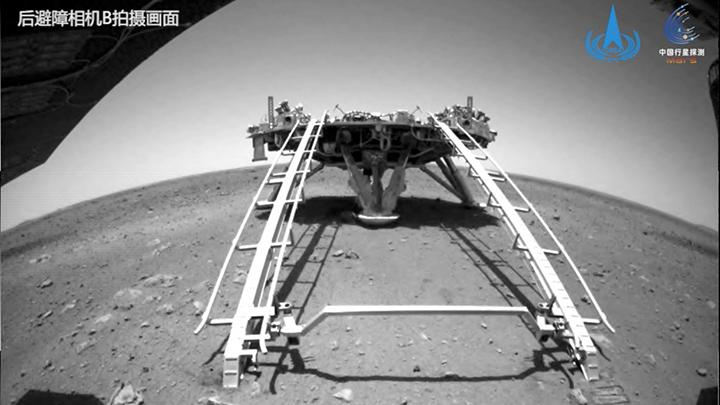
The success of China's Tianwen-1, which sent the Zhurong rover to Mars, paved the way for Tianwen-2 and future missions, such as Tianwen-3 and 4
Trump Cuts NASA Budget, US House Worries About Asteroid Strike
19 Mei 2025

The US House Committee on Space, Science, and Technology has expressed concerns over President Donald Trump's plan to cut the budget for the National Aeronautics and Space Administration (NASA) by up to 24 percent.
Scientists: Asteroid 2024 YR4 Has the Potential to Collide with the Moon, Not Earth
18 Februari 2025

If this asteroid were to collide with the moon, the impact would likely be clearly visible from Earth, although we would not be directly affected.
What is a Mini-Moon? Earth's Mysterious Visitor to Orbit This September
23 September 2024
Earth is set to host a new mini-moon at the end of this September. Read on to explore the details of this rare celestial phenomenon.
Asteroid That Doomed the Dinosaurs Originated Beyond Jupiter
17 Agustus 2024

An asteroid slammed into the Earth 66 million years ago eradicating about three-quarters of the world's species and ending the age of dinosaurs.
NASA Launches Longest Mission to Explore Distant Asteroids
16 Oktober 2021

NASA launches its Lucy spacecraft on Saturday on a 12-year journey to explore Jupiter's Trojan asteroids.
Loud Boom in Bali's Buleleng Allegedly due to Exploding Meteor
25 Januari 2021

Residents in Buleleng, Bali, and its surrounding areas were shocked by a loud boom on Sunday morning, January 24.
LAPAN: Solar Eclipse and Asteroid Skimming Earth Not Correlated
26 Desember 2019

LAPAN researcher, Rhorom Priyatikanto, said Thursday's solar eclipse and near-earth asteroid are not correlated to each other.