
TEMPO.CO, Jakarta - Bank Indonesia (BI) continues to monitor the risk of domestic inflation due to rising global oil prices, which could increase transportation and production costs, including food. This follows the Iran-Israel war.
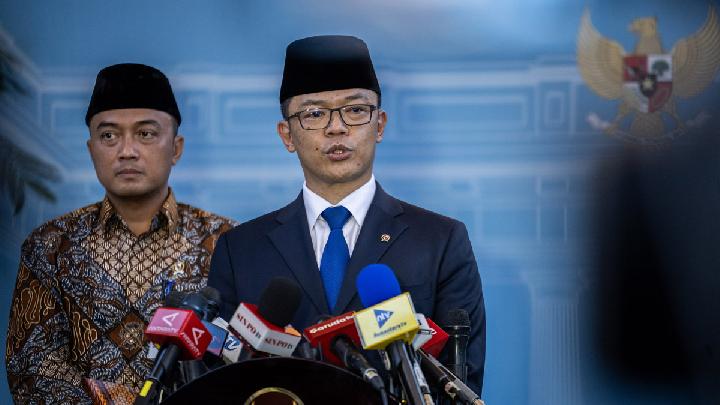
BI Deputy Governor Aida S. Budiman stated that the central bank will continue to monitor the latest indicators regarding global conditions that could impact the domestic economy in three main ways.
"Now we are starting to see developments in oil prices, gold prices, and later it will also be important to monitor food prices. Because if oil prices increase, there will certainly be an impact on transportation costs and other things," Aida said, as quoted by Antara, Tuesday, March 3, 2026.
She explained that the central bank is also closely monitoring financial market conditions that could affect the exchange rate. This could also impact the prices of imported goods and domestic price stability.
Furthermore, BI is monitoring the slowdown in global trade, which could suppress economic growth, which in turn impacts demand dynamics and inflation. "BI remains committed to maintaining stability. And we continue to be present in the market to ensure exchange rate stability is maintained, including inflation," Aida said.
Consumer Price Index (CPI) inflation in February 2026 was recorded at 4.76 percent year-on-year. This development was influenced, among other things, by the low base effect, as the government implemented a policy of electricity tariff discounts last year, which drove deflation.
In February 2026, administered prices recorded inflation of 12.66 percent, a jump compared to the deflation of minus 9.02 percent in February of the previous year.
Bank Indonesia assesses that the domestic economic outlook for 2026 remains strong. Aida stated that the momentum of economic growth, particularly in the first quarter, needs to be optimally utilized, given that this period includes several religious holidays that drive increased public consumption.
Furthermore, based on projections, government consumption is also expected to increase. The government has expressed its commitment to realizing various spending in the first quarter to ensure the smooth running of programs. "If that happens, private consumption will certainly increase, and this will result in increased domestic demand and other production," Aida said.
She emphasized the importance of maintaining domestic demand, especially amidst dynamic global conditions still shrouded in uncertainty. Strengthening domestic sources of growth is considered a key asset for maintaining economic stability and momentum.
Overall, Aida stated that the Indonesian economy remains stable. After growing by 5.11 percent in 2025, Bank Indonesia estimates economic growth in 2026 to be in the range of 4.9-5.7 percent. Inflation is also projected to remain under control within the target range of 2.5 plus or minus 1 percent. "Of course, regarding the various impacts of the war (the three main impacts monitored by BI), we will continue to monitor them further," Aida said.
From the external side, the current account deficit is expected to remain under control at around 0.9 percent to 0.1 percent of gross domestic product (GDP).
Read: Analyst Projects Rupiah to Weaken Following US-Israel War on Iran
Click here to get the latest news updates from Tempo on Google News
Analyst Projects Rupiah to Weaken Following US-Israel War on Iran
21 jam lalu

Currency analyst at Doo Financial Futures, Lukman Leong, projects that the rupiah will weaken today.
Bank Indonesia Moves to Stabilize Rupiah as Iran Conflict Escalates
1 hari lalu

Bank Indonesia will continue to carefully monitor market movements and ensure that the rupiah exchange rate aligns with its fundamentals.
Purbaya Extends Rp200tn Bank Placement to Bolster Liquidity
6 hari lalu
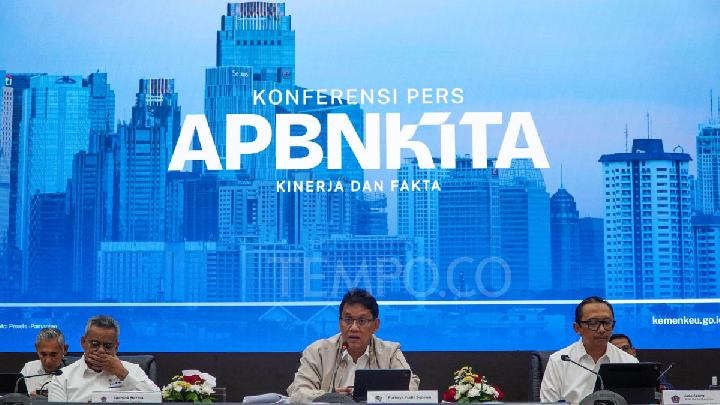
Finance Minister Purbaya Yudhi Sadewa extends the placement of Rp200 trillion in government funds within the banking system until September 2026.
QRIS to Expand Connection to India and Saudi Arabia
7 hari lalu
Indonesia's digital payment system QRIS is now available in several countries, with fast payment transaction value reaching Rp1.8 quadrillion.
BI Sets 2026 Monetary Policy to Anchor Inflation, Stabilize Rupiah
8 hari lalu

BI directs monetary policy consistently to maintain inflation at 2.51 percent and to preserve the stability of the rupiah exchange rate.
Bank Indonesia Projects Inflation to Exceed 3% During Ramadan
10 hari lalu

Bank Indonesia (BI) projects that inflation during the month of Ramadan will remain stable, with a slight increase above 3 percent.
Indonesia Sees Balance of Payments Deficit of US$7.8 Billion in 2025
10 hari lalu
Bank Indonesia (BI) reported Indonesia's Balance of Payments swung to a US$7.8 billion deficit in 2025 from a US$7.2 billion surplus in 2024.
Rupiah Remains Undervalued Despite Market Pressure, Says Bank Indonesia
11 hari lalu

Bank Indonesia (BI) assesses that the exchange rate of the rupiah is still undervalued or considered lower than the fundamental economic conditions of Indonesia.
Bank Indonesia Logs 22.65% Idle Banking Credit in Early 2026
11 hari lalu

Bank Indonesia reports undisbursed loans rose to Rp2,506.47 trillion in January 2026.
Bank Indonesia Holds Benchmark Rate at 4.75%
11 hari lalu

Bank Indonesia's decision to maintain the benchmark interest rate aligns with its focus on stabilizing the value of the rupiah.