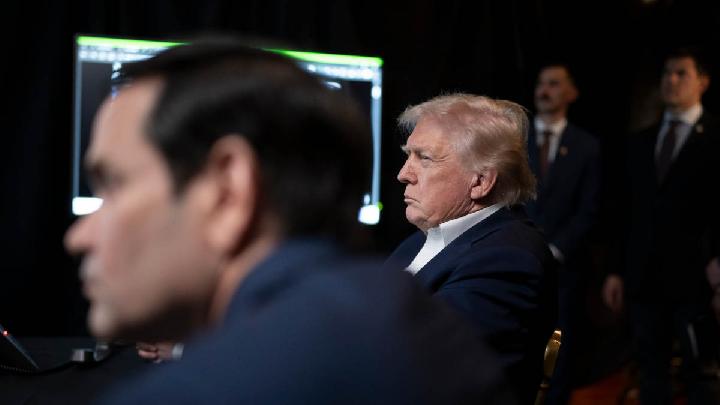
TEMPO.CO, Jakarta - The US Secretary of State, Marco Rubio, hinted on Sunday that Washington will not be taking a day-to-day role in governing Venezuela, except for enforcing an existing "oil quarantine". As reported by Al Jazeera, this influence is being used by the US to pressure policy changes in Venezuela.
Rubio's statement seems to be designed to ease concerns, a day after President Donald Trump announced that the US would "run" the oil-rich country.
The Trump administration's actions have raised concerns within some factions of his own Republican Party, including the "America First" base that opposes foreign intervention, as well as from observers who remember the US invasions in Iraq and Afghanistan over two decades ago.
Rubio dismissed these criticisms, stating that Trump's intentions had been misunderstood by "foreign policy establishment" fixated on the Middle East.
Vice President JD Vance also defended Trump, saying he had seen "a lot of criticism" regarding Venezuela's oil.
"About 20 years ago, Venezuela seized American oil properties and until recently used that stolen property to enrich themselves and fund their narco-terrorism activities. I understand the concerns about the use of military force, but are we just going to let a Communist steal our stuff in our hemisphere and not do anything?" Vance was quoted as saying by the Guardian.
"Great nations do not behave that way. The United States, thanks to President Trump's leadership, is back as a great nation. Everyone should take notice."
US Citizens' Protests
Protests have occurred in various cities in the US against Trump's military actions in Venezuela. Hundreds of people gathered in the rain in downtown Los Angeles, carrying banners reading "Stop bombing Venezuela now!" and "No blood for oil".
"I stand against US imperialism altogether. They want oil … They want to help the corporate billionaires. Bombing is just their means to building power like that, of taking control. So again, I’m against it," said a demonstrator named Niven.
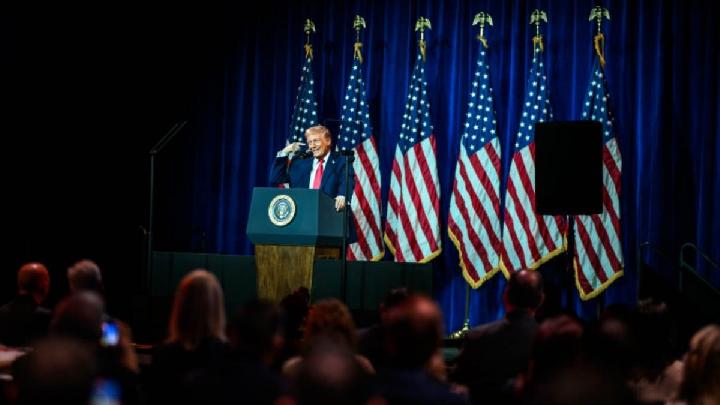
On Saturday, Trump delivered a speech in which he briefly mentioned what he called the "war on drugs" - which has been the primary justification for months for bombing Venezuelan ships and assets. However, he argued that Venezuela has "stolen" oil from the US and that the oil will now be taken back.
UN Special Rapporteur on human rights and counter-terrorism, Ben Saul, called the US actions in Venezuela illegal, and called for Trump to be investigated and impeached.
"Every Venezuelan life lost is a violation of the right to life. President Trump should be impeached and investigated for the alleged killings," he said in a social media post.
The UN Security Council is scheduled to meet on Monday, January 5, 2026, to discuss the situation in Venezuela. UN Secretary-General Antonio Guterres said he is "deeply alarmed" by the US attack, which, according to a spokesperson, could "constitute a dangerous precedent".
Uncertainty in Venezuela
Some Venezuelans in Caracas welcomed Maduro's arrest by the US, but others said the action could worsen the conflict in the country, with protests condemning the US ongoing.
"There should be a positive change for all Venezuelans, because it has been 28 years of government, and now is the time for transition in this country," said Ronald Gaulee, a motorcyclist in Caracas.
Trader Juan Carlos Rincon was more cautious. "The truth is that there is a lot of manipulation behind all this," he said. "We want to be at peace, move forward, and for Venezuela to have, like any other country, the right to choose its own destiny and its own leaders."
Bread trader Franklin Jimenez said he would heed the government's call to defend the country.
"If they took him away, I think they shouldn’t have done so, because this will create an even worse conflict than the one we have now," he said. "And as for the bombings and all that, we have to go out, we all have to go out into the streets to defend our homeland, to defend ourselves."
While some Venezuelans have decided to flee the country amid the uncertainty. They are crossing the Venezuela-Colombia border to reach the city of Cucuta in Colombia.
Karina Rey described the "tense situation" in the city of San Cristobal, Venezuela, just across the border.
"There are long lines, and people are very paranoid, or on edge, over food. Supermarkets are closing," Rey told Al Jazeera. "The lines are very long just to stock up on food, because we don’t know what will happen in the coming weeks. We’re waiting to see what happens."
Alessandro Rampietti from Al Jazeera, reported from Cucuta, said many Venezuelans there initially felt joyful after Maduro was ousted. "But that quickly shifted to uncertainty," he said.
"Several people said they expected the United States to immediately bring opposition leader Maria Corina Machado back into the country, along with Edmundo Gonzalez Urrutia, who many Venezuelans believe won the last presidential election," Rampietti continued.
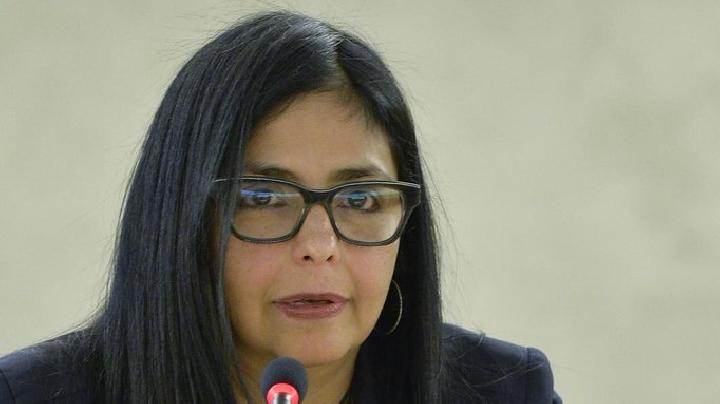
"Instead, with much of the existing leadership still in place and with Vice President Delcy Rodriguez appointed as interim leader, there is growing fear about what could happen next."
Tiziano Breda, a senior analyst at Armed Conflict Location and Event Data Project, said what happens next depends on the government's response and Venezuela's armed forces.
"So far, they’ve avoided direct confrontation with US forces, but deployments on the streets point to efforts to contain unrest," he said.
"A smooth transition remains unlikely, and the risk of resistance from pro-regime armed groups – including elements within the military and Colombian rebel networks active in the country – remains high."
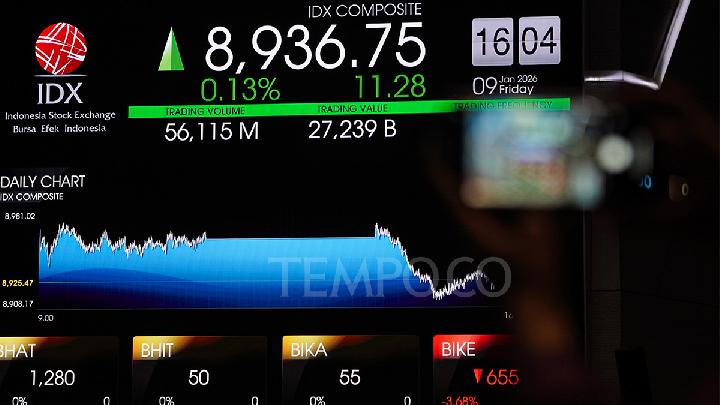
Read: Indonesia's Stock Market Opens Higher Amid U.S.-Venezuela Tensions
Click here to get the latest news updates from Tempo on Google News