August 3, 2026 | 04:10 pm
Believed to have been pressured to resign, the Governor of Bank Indonesia no longer holds his position. It is a fast track to damage a country’s economy.
IN financial markets, central bank independence is the primary pillar for maintaining trust. A central bank free from intervention can maintain the credibility of a country’s monetary policy. This can provide investors with the confidence to invest.
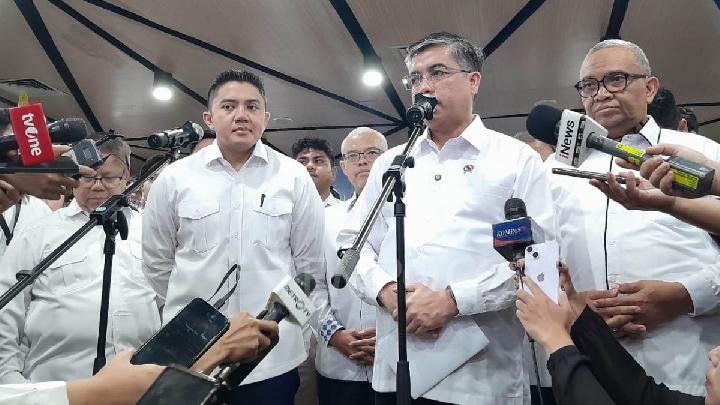
This classic formula was undermined when Perry Warjiyo suddenly resigned as Governor of Bank Indonesia (BI). State Secretary Prasetyo Hadi publicly announced that Perry was stepping down for personal reasons. It is strongly suspected that he resigned due to interference from the Presidential Palace.
The root of the problem is the auction of Bank Indonesia Rupiah Securities (SRBI). Offering a yield of 7.67 percent—2 percentage points above the BI Rate—this central bank’s instrument for maintaining rupiah stability could bring in foreign funds and provide domestic liquidity. As of June 2026, of a total SRBI of Rp1,073 trillion, Rp616 trillion was held by national banks. As a result, liquidity in the money market has dried up.
The liquidity crunch has made it difficult for the Association of State-Owned Banks (Himbara) to provide credit to the red-and-white village cooperatives. Under its loan arrangement, each cooperative requires Rp3 billion in initial capital. With approximately 80,000 cooperatives, the government requires at least Rp240 trillion. Finance Minister Purbaya Yudhi Sadewa subsequently withdrew the excess budget balance out of the Bank Indonesia into Himbara banks.
The SRBI policy is considered as hampering village cooperatives—despite being one of Indonesian President Prabowo Subianto’s favorite programs. This is why rumors are circulating that Prabowo intends to place the Bank Indonesia under the cabinet, as it was during the Suharto era. This concerns the market.
If the central bank is under the government’s control, Prabowo will repeat the mistakes of his former father-in-law. At that time, the Bank Indonesia helped finance budget deficits and unproductive government projects. Weak banking supervision also caused private debt to surge when the rupiah weakened. As a result of the central bank’s lack of independence, Indonesia’s economy took a battering during the 1997-1998 monetary crisis.
One of the keys to building post-Reformasi economic stability was safeguarding the central bank’s independence. To restore market confidence, President B.J. Habibie guaranteed that independence through Law No. 23/1999—a policy that helped pull Indonesia out of the financial crisis. An autonomous central bank also served as Indonesia’s anchor in navigating the 2008 global financial crisis and the 2013 Taper Tantrum.
Despite its independence being protected by law, the central bank has still been subject to external interference. Under President Joko Widodo, through a burden-sharing policy, the central bank shared the burden of purchasing zero-coupon government bonds to finance the budget deficit during the Covid-19 pandemic.
The arrival of Thomas Djiwandono, Prabowo’s nephew, into the BI Board of Governors further undermines the central bank’s independence. Besides being fraught with conflicts of interest, this intervention is inextricably linked to Prabowo’s view that everything must be under his control, including fiscal and monetary authority. This is the hallmark of a command economy.
Prabowo has also requested that Financial System Stability Committee (KSSK) meetings involve the Daya Anagata Nusantara Investment Management Agency, also known as Danantara, in all decision-making. This forum should only be attended by independent authorities (Bank Indonesia, the Financial Services Authority, and the Deposit Insurance Corporation) and the Ministry of Finance as the fiscal policy coordinator. Danantara’s presence at the meeting, as the manager of state-owned enterprise assets and strategic investments that should be subject to KSSK decisions, creates a potential conflict of interest. Danantara’s presence could also open the door to greater central bank monetary policy intervention.
We can take a cue from what happened in Turkey. Under President Recep Tayyip Erdoan, six central bank governors were fired for refusing to lower interest rates. The result: inflation soared 85 percent in 2022, and the Turkish lira plummeted. Hyperinflation also occurred in Zimbabwe and Venezuela because the central banks in those countries bowed to the authorities.
The experiences of those three countries must not be repeated in Indonesia. Intervention in the central bank has instantly shattered the trust that built up over years. If trust and economic and monetary stability collapse, the burden will not fall on the rulers, but on the common people.
OJK to Limit Government Ownership in Stock Exchange
4 hari lalu
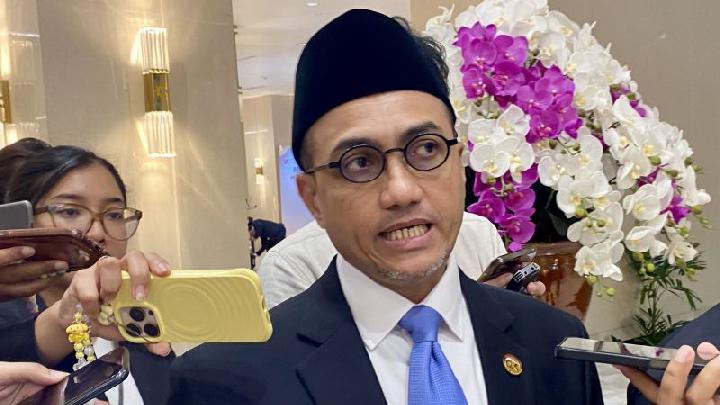
OJK drafts derivative rules to ensure government shareholding by the Finance Ministry, BI, and Danantara does not compromise the IDX's independence.
Experts Spill Why Market Remains Resilient After BI Governor Exit
4 hari lalu
Despite concerns about market pressure, first-day attitudes from investors remain under control following leadership shift in Bank Indonesia.
KPK Breaks Silence on Possible Perry Warjiyo Questioning in BI Corruption Probe
5 hari lalu

The Corruption Eradication Commission (KPK) emphasizes that the summoning of witnesses depends on the needs of the investigators, not because Perry Warjiyo resigned as the Governor of Bank Indonesia.
What Did Purbaya Say About Acting BI Governor Destry Damayanti?
5 hari lalu

Minister of Finance Purbaya Yudhi Sadewa welcomes Destry Damayanti as the interim Governor of Bank Indonesia and expresses confidence in her expertise in the field of monetary policy.
DPR Awaits Prabowo's BI Governor Nominee
6 hari lalu

Indonesia's DPR is waiting for President Prabowo to nominate the next BI governor before launching the confirmation process.
Danantara to Join Financial Stability Committee After BI Governor's Resignation
6 hari lalu
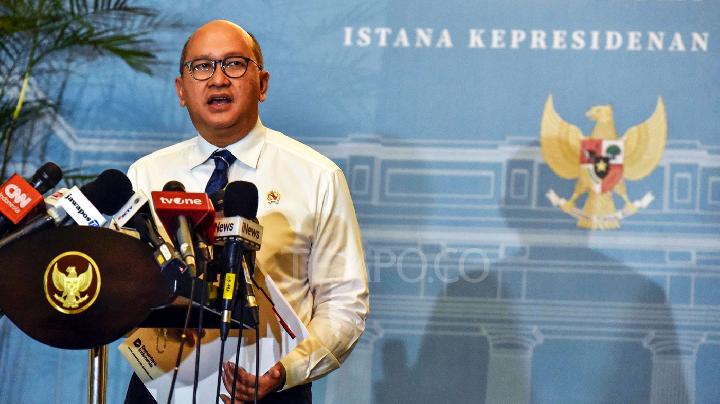
Danantara will be involved in decision-making within Financial Sector Stability Committee (KSSK) following resignation of Bank Indonesia Governor.
Perry Warjiyo's BI Exit: How Did Investors React to Leadership Shift?
6 hari lalu

BI Acting Governor Destry Damayanti urged markets to stay calm after Perry Warjiyo resigned, assuring policy continuity and rupiah stability.
Did Perry Warjiyo's Exit as BI Governor Trigger the Rupiah Decline?
6 hari lalu
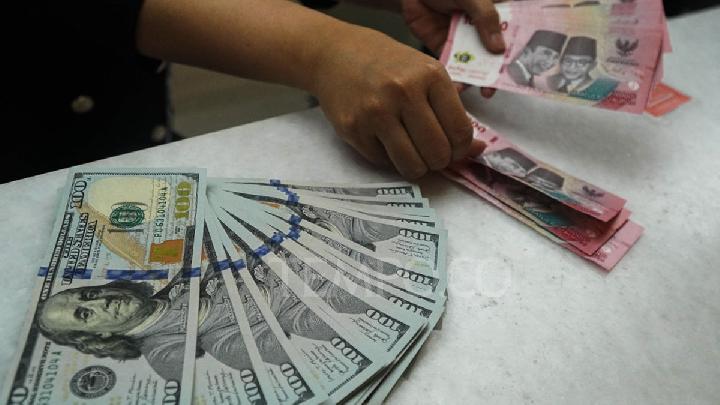
The exchange rate of the rupiah against the US dollar at the close of trading on Monday weakened by 46 points to Rp 18,009 per US dollar.
What BI Must Do to Ease Market Jitters After Perry Warjiyo's Exit
6 hari lalu

The analyst said a swift transition in Bank Indonesia's (BI) leadership would help provide the certainty that financial markets need.
Purbaya Slated to Meet BI Leaders Following Perry Warjiyo's Exit
7 hari lalu

Perry Warjiyo abruptly resigned from his position as BI Governor on Monday morning, July 27, 2026.