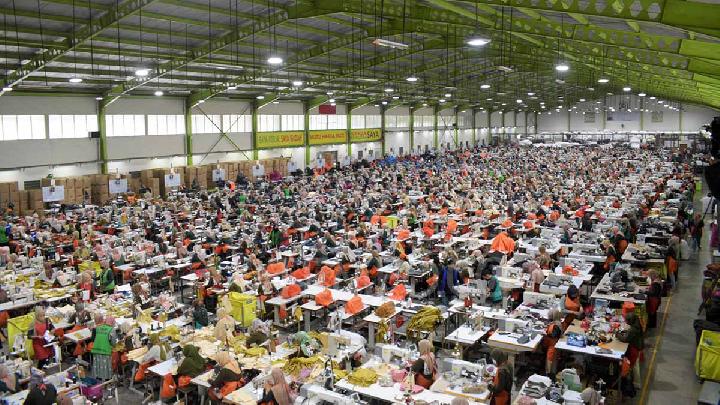
TEMPO.CO, Jakarta - Standard & Poor’s Global Ratings (S&P) reported that Indonesia’s manufacturing sector returned to expansion territory in May 2026, with the Purchasing Managers’ Index (PMI) rising to 50.0 from 49.1 in April.
The improvement signals a stabilization in business conditions after a contraction in the previous month. However, manufacturers continued to face significant challenges, including rising raw material costs and shortages of production inputs.
“Indonesia’s manufacturing economy remained under pressure in May, as production was constrained by higher raw material prices and limited input availability,” said Usamah Bhatti, economist at S&P Global Market Intelligence, in a report released on Tuesday, June 2, 2026.
New orders increased for a second consecutive month, recording the strongest growth since February. The expansion was driven mainly by stronger domestic demand. In contrast, export performance weakened considerably, with international sales falling for a third straight month. The decline was the sharpest since August 2021.
Survey respondents attributed the drop in export orders to the ongoing conflict in the Middle East and rising prices, which weighed on global demand.
Despite stronger demand, manufacturers continued to struggle with escalating raw material costs, which put pressure on production activity. As a result, factory output contracted for a third consecutive month, although the pace of decline eased compared with April.
Employment levels also fell for a third straight month as companies adjusted to lower production volumes, though the reduction in staffing was only marginal.
Inflationary pressures intensified during the month. Input cost inflation accelerated to its highest level since September 2013, driven largely by higher raw material prices. Manufacturers responded by passing part of the increased costs on to customers, resulting in the sharpest rise in selling prices since October 2013.
Rising prices and shortages of key inputs also weighed on purchasing activity. Many companies reported drawing down pre-production inventories as they struggled to secure raw materials. At the same time, limited production capacity forced firms to rely on existing stocks to meet customer orders.
Supply chain conditions remained strained. Average supplier delivery times lengthened for an eighth consecutive month, reflecting ongoing delays and material shortages linked to geopolitical tensions affecting supplier performance.
Backlogs of work increased for the first time since February, as shortages of raw materials hindered companies’ ability to fulfill orders on time.
Despite these challenges, manufacturers remained optimistic about the year ahead. Business confidence strengthened compared with April, with firms expecting production growth to recover over the next 12 months, although overall sentiment remained below historical averages.
Indonesia Plans EV Incentives for 200,000 Vehicles This Year
27 hari lalu
Finance Minister Purbaya Yudhi Sadewa said the government is preparing EV incentives targeting 100,000 cars and 100,000 motorcycles this year.
How the Middle East Conflict Is Shaping Indonesia's Manufacturing Industry
6 Maret 2026
Industry Minister Agus Gumiwang Kartasasmita stated that the conflict between the U.S.-Israel and Iran triggered global energy price volatility.
Indonesia Manufacturing PMI Hit Two-Year High at 53.8, Employment Rises
2 Maret 2026

S&P reports that the Purchasing Manager's Index (PMI) for Indonesian manufacturing in February is still in the expansion zone.
EVs Prop up Indonesia's Net Zero Emissions Goal in Manufacturing Industry
5 Februari 2026
The ecosystem of electric vehicles becomes one of the focuses in accelerating the net zero emission manufacturing industry by 2050.
IBM Sees Growing AI Adoption in Indonesia's Manufacturing
28 Desember 2025

According to IBM's data, over the past 3-5 years, many industry players have surpassed the initial experimental phase. They have started AI pilot projects.
Indonesia Manufacturing PMI Hits Highest Record Since February
1 Desember 2025

Manufacturing PMI in November reached 53.3, the highest since February 2025 at 53.6.
Delay in Indonesia's 2026 Minimum Wage Announcement Sparks Concerns in Manufacturing Sector
26 November 2025

Vice Chairman of Apindo, Sanny Iskanda, expressed concerns that the delay in announcing the Regional Minimum Wage (UMP) for 2026 might exacerbate the investment climate in Indonesia.
Industry Ministry: Manufacturing Sector to Drive Indonesia's Economic Growth in Q3 2025
6 November 2025
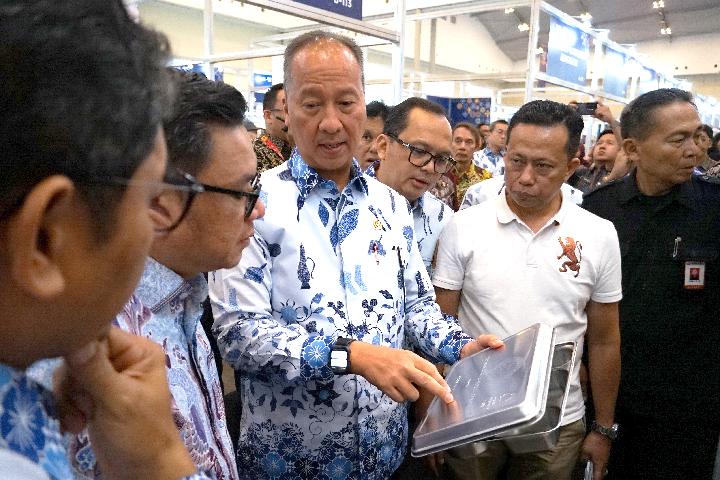
Despite the manufacturing sector's higher-than-average growth, production capacity utilization remains at 59.28 percent.
Indonesia Records US$209 Billion in Exports by September, BPS: 8.14% Growth
3 November 2025
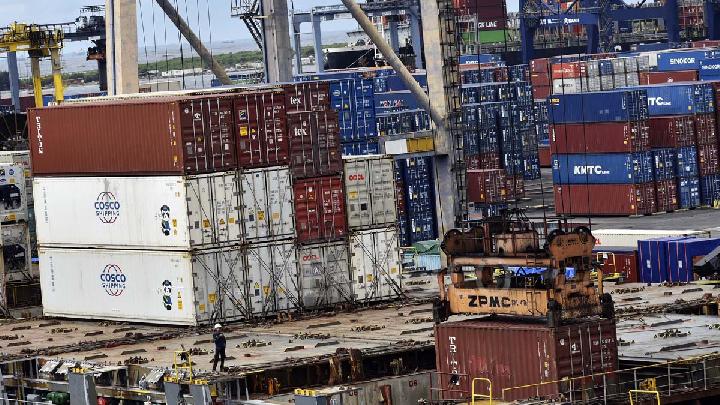
BPS noted that the increase in exports was mainly driven by a 9.57 percent rise in non-oil and gas exports y-o-y.
Domestic Demands Drive Manufacturing PMI Growth to 51.2 in October
3 November 2025

S&P reported that the Purchasing Manager's Index (PMI) for Indonesian manufacturing in October 2025 remained in the expansion zone.