TEMPO.CO, Jakarta - Indonesia's Deputy Minister of Environment Diaz Hendropriyono explained the chronology of the discovery and handling of Indonesian cloves contaminated with radioactive Cesium-137 (Cs-137). He mentioned that the case started with the findings of the Food and Drug Administration (FDA) at the end of September and is now in the final stage of destruction by the Indonesian government.
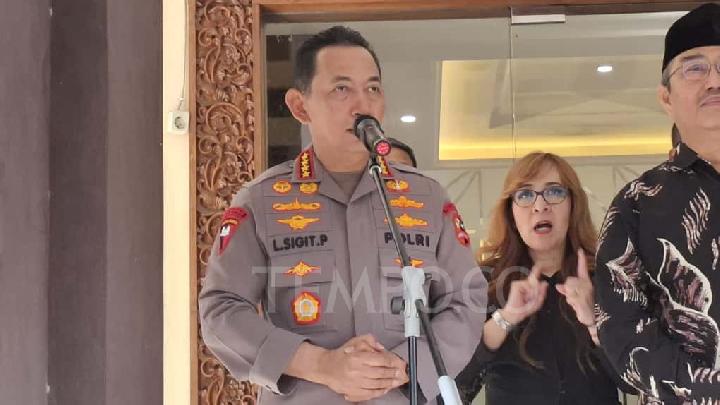
"At that time, Cs-137 content was found in clove products. This was found in Indonesia by the FDA from the US," said Diaz at a press conference at Plaza Kuningan, South Jakarta, on Tuesday, November 11, 2025.
According to him, the FDA found Cs-137 content in clove products imported from PT Natural Java Spice (NJS) in Surabaya. The examination results showed that the Cesium levels reached 732.43 Bq per kilogram, below the FDA's established safe limit of 1,200 Bq/kilogram. However, the FDA still decided to return the products to Indonesia.
Here is the chronology:
October 1 to 3: Initial Inspection
Following the discovery, the Indonesian government's Cs-137 Handling Task Force immediately conducted an inspection at the PT NJS factory in Surabaya. The examination results showed no Cs-137 contamination in the facility. "Actually, this should still be below the intervention limit, the safe limit set by the FDA itself, which is 1,200 Bq per kilogram," said Diaz.
The team then continued verification in a number of clove supplier plantations in Pati (Central Java), South Lampung, and Pesawaran (Lampung).
October 8 to 11: Field Verification
Diaz said the field investigation results in the three areas concluded that there was no indication of radiation contamination in the plantation locations. The Nuclear Energy Regulatory Agency (Bapeten) team also collected samples of clove flowers, cocoa, and soil from eight points for analysis in the laboratory. "From eight points in these clove plantations in South Lampung and Pesawaran, to be analyzed in the laboratory," he said.
October 25: Radiation Exposure Findings
Radiation exposure of Cs-137 was then found at the public cemetery in Penengahan Subdistrict, South Lampung, with a radiation level of 1.05-1.3 microsieverts per hour, exceeding the natural limit of 0.5 microsieverts per hour. The government then undertook cementation steps in the area, which lowered the radiation level to 0.11-0.18 microsieverts per hour, thus declared safe.
"So, based on the considerations of Bapeten and BRIN, the team then carried out cementation. So, it was cemented at this point, and as a result, the radiation decreased from 1.05-1.30 to 0.11-0.18," he said.
November 1: Cloves Arrive at Tanjung Perak
Subsequently, 21.6 tons of clove containers returned from America arrived at Tanjung Perak Port, Surabaya. Of that amount, 13.5 tons were indicated to be contaminated with Cs-137 with exposure of 0.02-0.12 microsieverts per hour, still below the safe limit of Bapeten. "Even though this radiation is still within the safety limit set by Bapeten," said Diaz.
November 4: PT NJS Hands Over Cloves
PT NJS expressed willingness to hand over the 13.6 tons of contaminated radiation-exposed cloves for destruction. The government conducted container decontamination using the dry method and moved all cloves to the PT NJS warehouse in Benowo, Surabaya.
Diaz emphasized that the final step being prepared is the destruction of all contaminated cloves. "The Ministry of Environment along with BRIN and Bapeten will begin the process of destroying the 13.6 tons of cloves contaminated with Cs-137," he said.
Regarding the source of radioactive Cs-137 in clove products, Diaz said the Task Force Team has also investigated from the plantation areas to the clove warehouse owned by PT NJS in Lampung Province, and found no Cs-137 contamination.
The areas examined included three community-owned clove plantations in Pesawaran District, Lampung; the clove warehouse in Sidomulyo, South Lampung; clove plantations owned by the community in Penengahan, South Lampung; community clove plantations in Kalianda, South Lampung; community rice fields in Penengahan, South Lampung; the public cemetery area in Penengahan, South Lampung; and the Bakauheni Port area, South Lampung.
"On October 8-11, 2025, the joint team of Bapeten, the Ministry of Environment, BRIN, and the Police conducted an investigation in these areas, and no CS-137 contamination was found. The plantations in the three districts were confirmed by Bapeten as clean and clear," he said.
Contrarily, CS-137 contamination was found by the investigation team in the public cemetery area in Penengahan, South Lampung. "On October 25, 2025, the team found Cs-137 exposure in the public cemetery in Penengahan, South Lampung, with a dose rate of 1.05-1.30 microsieverts/hour. This is above the limits set by the Food and Drug Administration and Bapeten, namely 0.5 microsieverts/hour," he said.
For the exposed cemetery area, the Task Force has carried out a 13-centimeter concrete sealing. "Sealing has been done with 13 centimeters of concrete in the cemetery, it should be safe by now," said Diaz.
At the same time, Deputy for Pollution Control and Environmental Damage at the Ministry of Environment, Rasio Ridho Sani, said the location's security was done by the process of concreting because the discovery area was quite far from the temporary waste storage, which is in Jakarta.
In addition, the Ministry of Environment will continue to monitor and coordinate with Bapeten and BRIN. "After we seal it, we will also conduct monitoring. Yes, we will coordinate, of course, this falls under the authority of Bapeten and BRIN," he said.
He mentioned that the source of Cesium in the cemetery is about 3-5 kilometers away from the clove plantations supplying PT NJS. He also stated that the closest residential area from the radioactive source is about 50-100 meters. "We are still tracing the source of Cesium exposure in the cemetery location," he said.
Previously, the Cs-137 Task Force ensured that only one of the 12 containers of cloves shipped to America was indicated to be contaminated with the radioactive substance. "One container suspected of Cs-137 contamination is scheduled to arrive in Surabaya on October 29, 2025. So, only one container is suspect," said the Head of Diplomacy and Communication of the Cs-137 Task Force, Bara Krishna Hasibuan.
The Task Force has conducted field inspections to prepare for Tanjung Perak Port, Surabaya, and testing in Bapeten and BRIN laboratories upon the arrival of the suspect container of cloves.
Editor’s Choice: Indonesia Closes Tanjung Perak Port as Radioactive Cloves Returned from US
Click here to get the latest news updates from Tempo on Google News