November 12, 2025 | 09:59 am

TEMPO.CO, Jakarta - Two female researchers from Bandung Institute of Technology (ITB) in Indonesia, along with two others from the Indonesian National Research and Innovation Agency (BRIN) and Warmadewa University, have been awarded the L'Oreal-UNESCO For Women in Science (FWIS) 2025. Each of them received research funding of Rp400 million and the opportunity to network with a community of female researchers worldwide.
The four awardees are Maria Apriliani Gani, a lecturer and researcher at the ITB School of Pharmacy who is developing a cell model for plant-based osteoporosis therapy. Her approach allows for screening of drug candidates that can simultaneously stimulate bone formation and suppress bone resorption without using animal testing.
Next is Lutviasari Nuraini from the BRIN Metallurgy Research Center. She is developing implant materials based on magnesium alloys for bone regeneration. By adding rare earth metal Neodymium (Nd), this research aims to enhance mechanical strength and control the degradation rate of magnesium to keep the implant stable during the healing process.
The third female researcher to receive the L'Oral-UNESCO For Women in Science 2025 award is Anak Agung Dewi Megawati, a faculty member of the Faculty of Medicine and Health Sciences at Warmadewa University in Denpasar, Bali. She is developing a broad-spectrum mRNA-based antiviral therapy for various diseases transmitted by mosquitoes. Her research is considered a major breakthrough in controlling tropical infectious diseases.
Lastly, Helen Julian, a lecturer in the Chemical Engineering and Food Engineering Study Program at the ITB Faculty of Industrial Technology. Helen participated in the development of an Integrated Membrane Photobioreactor-Nanofiltration system to process liquid waste from palm oil mills (POME) into high-value resources. Through this technology, microalgae utilize compounds in the wastewater to grow, producing biomass that can be converted into useful products such as bioenergy and food ingredients, while also improving the quality of the wastewater.
Maria, Lutviasari, Dewi, and Helen were selected from among 150 applicants who submitted research proposals from various universities and research institutions across Indonesia. Among them, 70 percent were female researchers under the age of 40. "This year is special because it has the largest number of applicants in the past five years," said Chair of the Jury Council for L'Oral-UNESCO For Women in Science 2025, Herawati Sudoyo, as quoted from a press release on November 11, 2025.
It was mentioned that the majority of research proposals submitted were rooted in the local potential and biodiversity of Indonesia. Ranging from the development of native plants into high-value active ingredients, to waste management innovations to become sustainable resources. "In addition to being beneficial for the country, the selected female researchers demonstrate a strong track record and potential for collaboration; because without collaboration, research is almost impossible to realize," added the professor specializing in molecular biology.
In the same press release, Deputy Minister of Higher Education, Science, and Technology Stella Christie emphasized that women have no less ability than men in science and mathematics. In line with L'Oral's initiative, Stella revealed her efforts to strengthen the narrative of the important role of women in research and innovation; one of which is through the 'Science for Women and Women for Science' program and programs under the Directorate of Science and Technology Dissemination.
'Increasing the participation of women in the field of science is not just a matter of equality, but also an economic issue. Because, the country will lose out if it does not utilize the best individual potential in their field,' she added.
President Director of L'Oral Indonesia Benjamin Rachow admitted that research and innovation are fundamental to L'Oral. Through the For Women in Science program, the company supports female researchers to bring impactful science, provides access to collaborative networks, and also provides space for them to shine.
"Because the world needs science, and science needs women," he said, adding that for over 22 years in Indonesia, 79 female researchers have received support to contribute to various fields of knowledge, "While also creating a multiplier effect that nurtures a new generation of female scientists across Indonesia."
Editor's Choice: ITB Researchers Lead Indonesia in 2025 World's Top 2% Scientists List
Click here to get the latest news updates from Tempo on Google News
BRIN Head Highlights Hefty Funding Required for Research
14 jam lalu
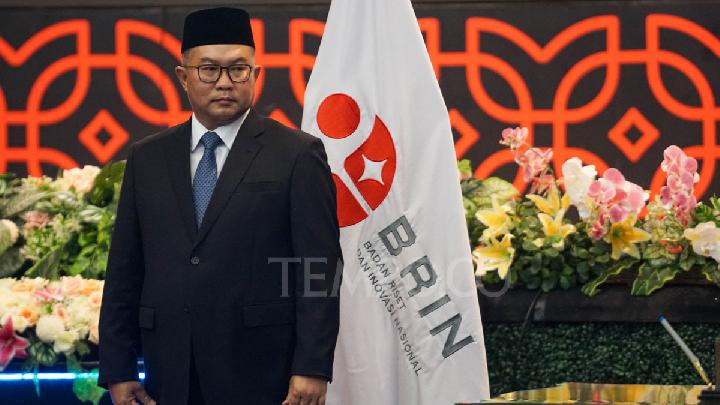
Arif Satria emphasizes the need for substantial funding for research and outlines alternative funding sources for BRIN.
Indonesia's BRIN Develops Active Materials for Next-Generation Batteries
23 jam lalu
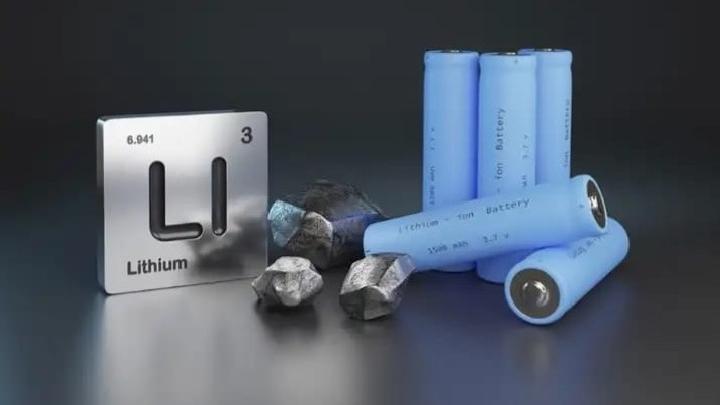
BRIN has developed new materials for next-generation batteries, advancing the country's role in global clean energy innovation.
New BRIN Head Vows to Oversee Prabowo's Priority Programs on Food, Energy
1 hari lalu
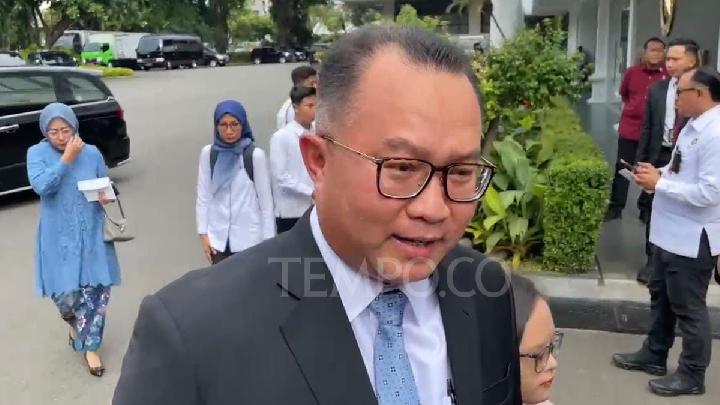
BRIN will also conduct national consolidation in research and innovation.
Komnas Perempuan Flags Lack of Recognized Women Heroes in Indonesian History
1 hari lalu
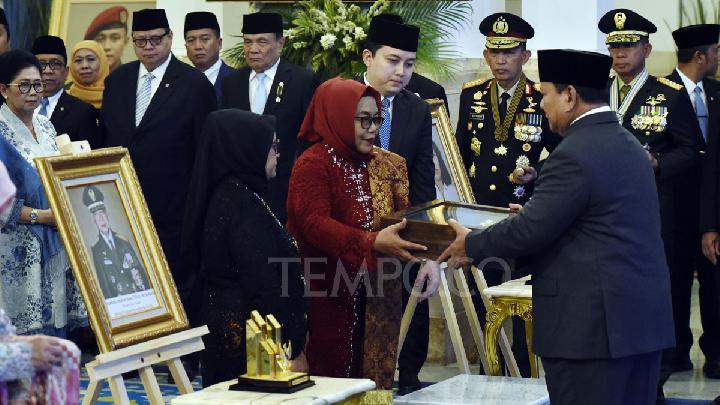
Komnas Perempuan (Indonesian National Commission on Violence Against Women) criticizes the historical recording of the Indonesian nation, including the conferment of national hero titles, for being predominantly masculine-oriented.
The Politics Behind the Push to Replace BRIN's Chief
1 hari lalu

BRIN's Steering Committee Chair Megawati Soekarnoputri faces pressure to propose replacing the agency chief. Is political interest at play?
Five Indonesian Scientists Awarded the 2025 Habibie Prize
1 hari lalu
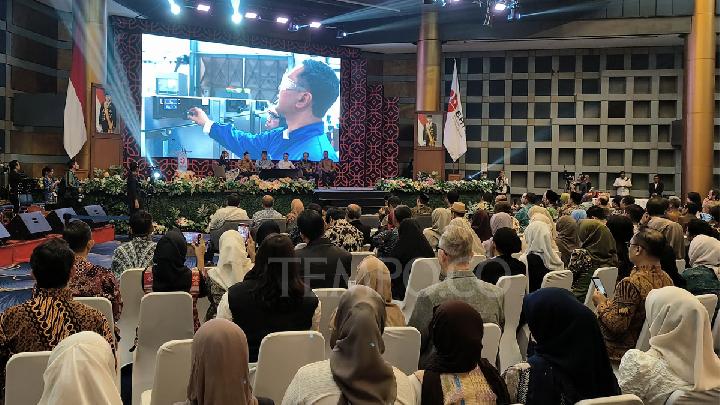
BRIN continues to uphold the tradition of honoring scientists. In 2025, the Habibie Prize was awarded to five national scientists from five fields of study.
The 5 Best Countries for Research and Development 2025
3 hari lalu

The United States remains the best country for research, backed by its commitment to spend hundreds of billions on R&D.
Cikande's Cesium-137 Decontamination: 63 Residents Relocated, Others Set to Follow
19 hari lalu
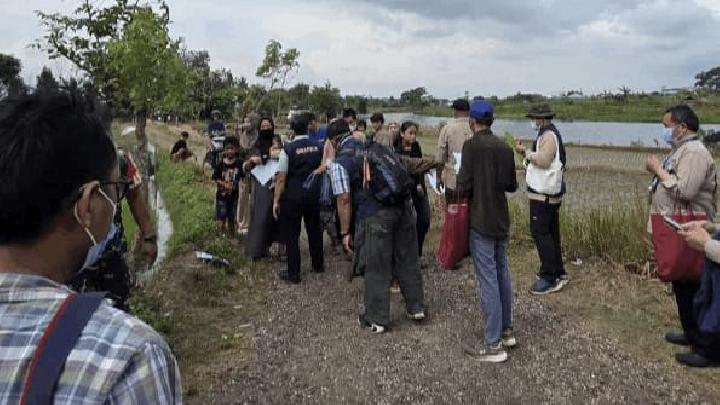
The decontamination process of radioactive Cesium-137 remaining in the industrial area is targeted to be completed by tomorrow.
3 Key Factors Behind Java's Sudden Shift from Scorching Heat to Humid Weather
20 hari lalu

BRIN explained that Java's weather transition is being driven by a combination of global and regional atmospheric factors occurring simultaneously.
Microplastics Detected in Rainwater Worldwide, Not Only in Jakarta
21 hari lalu
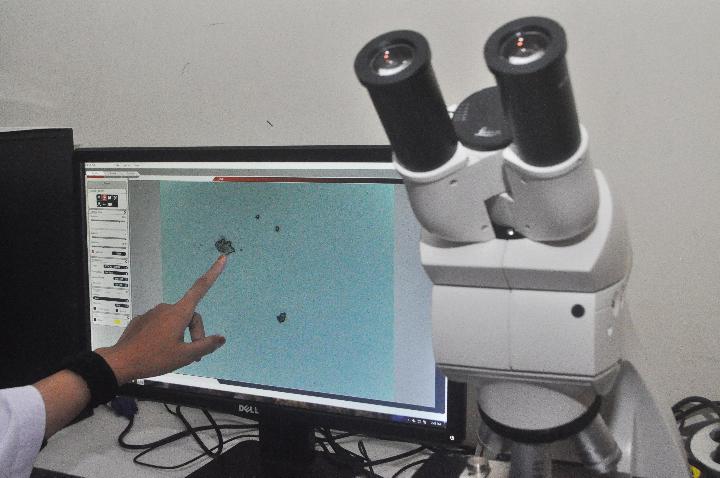
A study in China this year indicated that the concentration of microplastics was markedly higher in snow than in rainwater.