TEMPO.CO, Jakarta - Indonesian Jesuit priest and legal scholar Stefanus Hendrianto argues that the country's democracy has never been truly healthy since the beginning of the Reformasi era. Instead, the focus of Indonesia's democratic journey has centered solely on electoral competition.
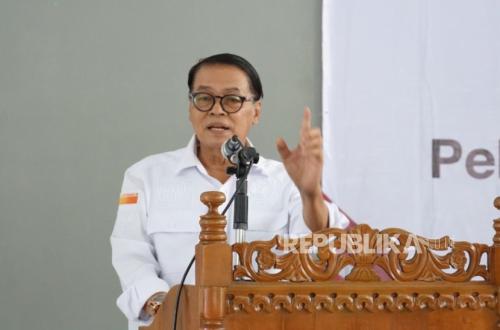
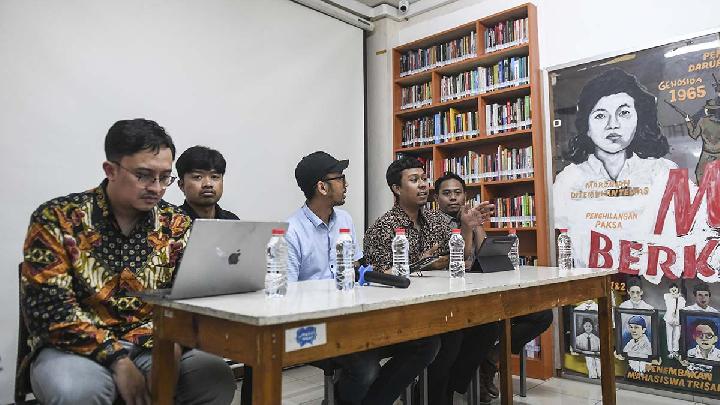
"Our democracy has essentially been at a standstill for the past two decades," Stefanus said during a discussion of his book, "Democracy and the Rule of Law in Indonesia," at the CSIS Auditorium in Central Jakarta on Wednesday, July 8, 2026.
Furthermore, Stefanus dismissed the narrative that Indonesia's 1950s democratic experiment was a failure. He contended, "The 1950s was Indonesia's golden age, a time when the parliamentary system functioned, civilian supremacy was upheld, and the elite maintained a commitment to democracy."
Structural Flaws and Adolescent Citizenship
In his book, he identifies the 1945 Constitution and the current presidential system as the roots of the nation's political ailments. To rectify this, he proposes replacing the presidential system with a parliamentary structure and comprehensively drafting a new constitution, which would include revising the Preamble of the 1945 Constitution.
Hendrianto also introduced the concept of an "adolescent democracy," describing a society easily swayed by social assistance handouts and short-term interests. He argued that this vulnerability reflects the absence of a mature citizenry necessary for a thriving democratic life.
On another note, the scholar rejected the notion that political polarization poses a threat to democracy. "Polarization is actually good because it provides the public with choices, whereas today we lack genuine ideological differences," he observed.
Stefanus also criticized the use of the term "oligarchy," labeling it an inaccurate description of the current Indonesian landscape. He instead favored the label "Authoritarian Constitutionalist Capitalist Regime," referring to a capitalist system wrapped in constitutional legitimacy while exercising inherently authoritarian power.
Ultimately, Hendrianto assessed that the concept of the rule of law in Indonesia has degraded into a mere instrument of those in power. However, he emphasized that hope remains if the younger generation finds the courage to enact fundamental reforms within the state apparatus and craft a constitution that genuinely safeguards democracy and the rule of law.
The Weight of Colonial and New Order Legacies
Bivitri Susanti, a constitutional law lecturer at the Indonesia Jentera School of Law, agreed with Hendrianto's primary thesis that the nation's democracy lacks a robust republican foundation. Nevertheless, she argued that this structural weakness stems not only from constitutional design but is influenced by colonial legacies and the New Order regime, which continue to shape contemporary political culture.
Bivitri explained that Dutch colonialism left behind a deeply entrenched feudal legacy within Indonesian society. She noted that this condition has been further reinforced by a pervasive culture of militarism, which elevates unquestioning obedience to superiors as a primary virtue in public life.
"We do not actually possess a solid foundation for a republic, and these two factors—colonialism and the New Order—are major contributors to that," Bivitri said at the forum on Wednesday, July 8, 2026.
She further observed that the New Order regime alienated citizens from politics through the concept of the "floating mass" and the slogan "development yes, politics no." Consequently, a public space dedicated to egalitarian discourse regarding the common good has never been allowed to fully mature.
Nevertheless, Bivitri agreed with Hendrianto's proposal to draft a new constitution, provided it fosters an environment where republican ideals can truly take root.
She emphasized that the priority should not merely be swapping legal texts, but rather engineering a political system that encourages robust public discourse, active citizen participation, and fresh visions for the country's future.
Bivitri added that the future of Indonesian democracy remains hopeful, particularly through the mobilization of the youth in building enduring social movements. True change, she stressed, is not achieved solely through elections, but by cultivating an active citizenship dedicated to reclaiming the public square and overseeing daily democratic life.
A Differing View from the President
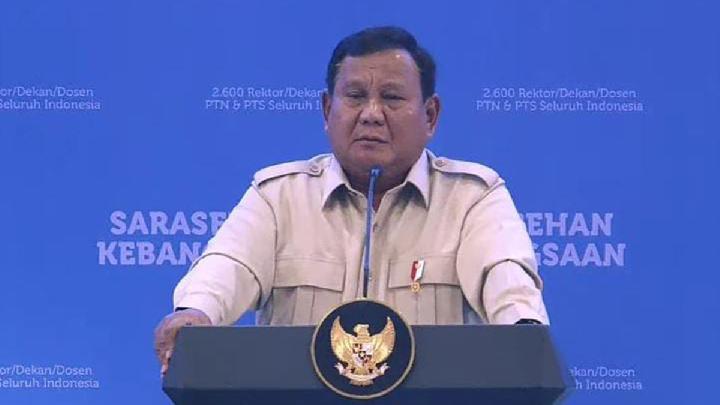
On a different note, President Prabowo Subianto recently remarked that democracy is fraught with diverse challenges and complex dynamics. In his view, democracy is not an easy system to implement.
Instead, he noted that the system carries distinct risks, ranging from institutional pitfalls to external forces attempting to hijack democratic processes for narrow agendas.
"It is the best system for justice, hope, and inclusiveness. We must not give up," Prabowo said during his address to the Indian diaspora at the Indian Community Reception in Jakarta, an event also attended by Indian Prime Minister Narendra Modi on Tuesday, July 7, 2026.
Ervana Trikarinaputri contributed to this article
Read: Prabowo: Democracy Is Not an Easy System, But It Is the Best
Click here to get the latest news updates from Tempo on Google News