TEMPO.CO, Jakarta - The United States (US) has attacked Venezuela and kidnapped President Nicolas Maduro, who has been in power for a long time, in an operation on early Saturday, said President Donald Trump. As reported by Al Arabiya, he promised to put the country under American control temporarily, including deploying US forces if necessary.
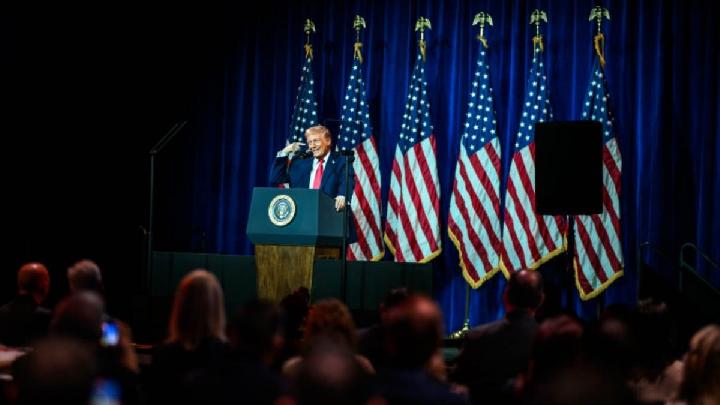
"We’re going to run the country until such time as we can do a safe, proper and judicious transition," Trump said in a press conference at his Mar-a-Lago resort in Florida.
"We can’t take a chance that someone else takes over Venezuela who doesn’t have the interests of Venezuelans in mind."
It is unclear how Trump plans to oversee Venezuela.
Despite the dramatic operation last night that cut off electricity in parts of Caracas and kidnapped Maduro at or near one of his hideouts, US forces do not have control over the country itself, and Maduro's government is still in power.
Trump's comments about an indefinite presence in Venezuela echo past leadership changes in Iraq and Afghanistan, both of which ended with the withdrawal of US forces after years of occupation.
He said he is open to the idea of sending US forces to Venezuela. "We’re not afraid of boots on the ground," he said.
Trump did not provide specific answers to repeated questions from journalists about how the US will run Venezuela.
US to Control Venezuelan Oil
"A US occupation won’t cost us a penny because the United States would be reimbursed from the money coming out of the ground," Trump said, referring to Venezuela's oil reserves, a topic he repeatedly discussed during Saturday's press conference.
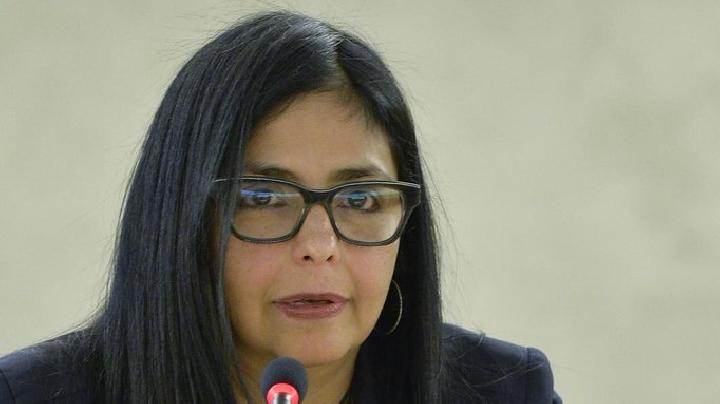
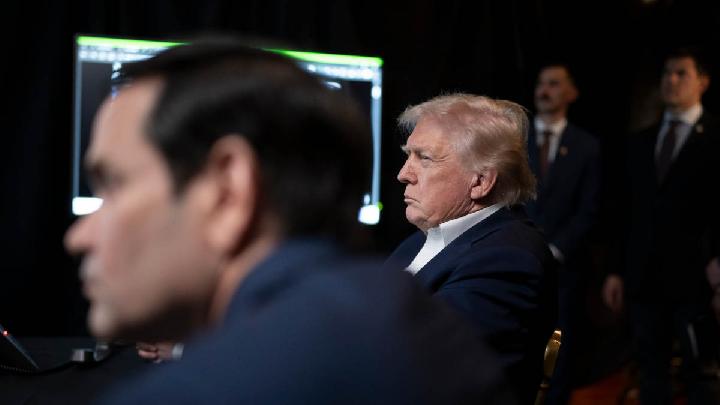
Trump said US Secretary of State Marco Rubio has been in touch with Venezuelan Vice President Delcy Rodriguez - Maduro's successor.
"'We’ll do whatever you need’,'" Trump claimed Rodriguez had said.
"She really doesn’t have a choice."
News agencies could not immediately confirm the conversation.
Four sources familiar with her movements claimed Rodriguez was in Russia. The Russian Foreign Ministry rejected reports of Rodriguez's presence in their country as "fake."
Potential Power Vacuum
The kidnapping of Maduro, who has led Venezuela for over 12 years, has the potential to create a power vacuum in the South American country.
Any serious destabilization in the 28-million-strong country threatens to present Trump with the type of threat that has marked US foreign policy for most of the 21st century, such as intervention in Afghanistan and Iraq.
The US has not engaged in direct intervention like this in its vicinity since the invasion of Panama 37 years ago to overthrow military leader Manuel Noriega on charges of leading drug smuggling operations.
The United States has made similar accusations against Maduro, accusing him of running a "narcostate" and manipulating the 2024 elections.
Maduro, a 63-year-old former bus driver who was directly elected by the dying Hugo Chavez to succeed him in 2013, has denied these claims. He asserts that Washington intends to take over the oil reserves of his country, which are the largest in the world.
Streets in Venezuela appeared calm at sunrise.
Soldiers patrolled in some areas, and small groups of Maduro supporters began to gather in Caracas.
However, there were expressions of relief.
"I’m happy, I doubted for a moment that it was happening because it’s like a movie," said trader Carolina Pimentel, 37, in the city of Maracay. "It’s all calm now but I feel like at any moment everyone will be out celebrating."
Venezuelan officials condemned the aggression on Saturday.
"In the unity of the people we will find the strength to resist and to triumph," Defense Minister Vladimir Padrino said in a video message.
Although various Latin American governments oppose Maduro and say he rigged the 2024 election, US direct action revives painful memories of past interventions and is generally strongly opposed by governments and residents in the region.
Trump's actions are reminiscent of the Monroe Doctrine, formulated in 1823 by President James Monroe, which asserts US claims to influence in the region, as well as the "gunboat diplomacy" seen under Theodore Roosevelt in the early 1900s.
Venezuela's allies, Russia, Cuba, and Iran, quickly condemned the attack as a violation of sovereignty. Tehran urged the UN Security Council to stop the "unlawful aggression."
Among the major Latin American countries, President Javier Milei of Argentina, who is a far-right extremist, praised the new "freedom" in Venezuela. While Mexico condemned the intervention, and Brazilian President Luiz Inacio Lula da Silva said it had crossed "unacceptable boundaries."
Read: Venezuelan President Nicolas Maduro Faces Four Life Sentences in the US
Click here to get the latest news updates from Tempo on Google News