January 14, 2026 | 10:29 am
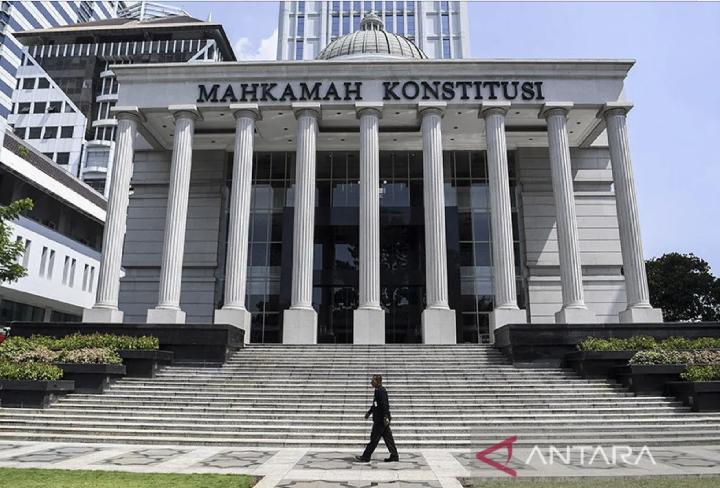
TEMPO.CO, Jakarta - Nine law students from several Indonesian universities have filed a judicial review at the Constitutional Court challenging a provision in the country’s newly enacted Criminal Code (KUHP), arguing that it threatens freedom of expression and legal certainty.
The students are contesting Article 302 paragraph (1) of Law No. 1/2023 on the Criminal Code, which criminalizes publicly inciting others to abandon religion or belief.
The petitioners include Rahmat Najmu, a law student at Malikussaleh University, and eight law students from Universitas Terbuka: Wahyu Eka Jayanti, Scholastica Asyana Eka Putri, Reni Rianti, Alliffah Wahyu Sanyoto T., Rifky Andy Darmawan, Gita Rahmawati, and Rizka Aliya Putri.
They argue that the provision constitutes a so-called pasal karet—a vague or elastic article—because it fails to clearly define what constitutes “incitement.”
According to the petitioners, this lack of clarity creates legal uncertainty and opens the door to broad and subjective interpretation, in violation of the principle of legality.
“The ambiguity leads to legal uncertainty and allows overly broad and subjective interpretations, which contradict the principle of legality,” said Nissa Sharfina Nayla, representing the petitioners, during a preliminary hearing at the Constitutional Court in Jakarta on Tuesday, January 13, 2025.
Article 302 paragraph (1) of the Criminal Code stipulates: “Any person who, in public, incites with the intention that someone becomes irreligious or abandons a belief recognized in Indonesia shall be punished with imprisonment of up to two years or a fine of up to Category III.”
The petitioners note that members of Indonesia’s religious majority, including students and academics, are actively involved in public discourse, activism, and scholarly discussions on issues related to religion, democracy, and constitutional law.
In this context, they argue, the undefined term “incitement” poses a serious risk to legitimate debate.
Nissa emphasized that the term is not clearly or firmly defined, either in the article itself or in the explanatory section of the Criminal Code.
As a result, there is no legal certainty regarding the boundaries of conduct that may be classified as “incitement.”
With the enforcement of Article 302 paragraph (1), the petitioners said they face a heightened risk of criminalization when exercising their constitutional rights to express opinions, thoughts, and beliefs in public.
They warned that personal expression could be construed as a criminal act even when it involves no coercion, violence, or intimidation, and is carried out solely as part of an exchange of ideas protected by the Constitution.
They further argued that the constitutionality of expression cannot be determined based on feelings of offense, psychological discomfort, or the subjective judgments of certain parties.
Instead, they said, restrictions on expression must be assessed objectively, based on whether the expression poses a real and direct threat to legitimate public interests.
In their petition, the students asked the Constitutional Court to declare Article 302 paragraph (1) of the Criminal Code unconstitutional and legally non-binding, on the grounds that it contradicts the 1945 Constitution.
The case is being examined by a panel of judges led by Constitutional Court Chief Justice Suhartoyo, with Constitutional Justices Daniel Yusmic P. Foekh and M. Guntur Hamzah as panel members.
During the initial hearing, Justice Guntur urged the petitioners to re-examine and fully understand the challenged provision within the broader framework of Indonesia’s legal system.
“Try to challenge this norm from the perspective of a Pancasila-based rule of law, and consider whether the conclusion of your petition still stands,” Guntur said.
At the close of the hearing, the panel instructed the petitioners to revise and refine their petition. The court scheduled the next hearing after the revised submission is filed, which must be completed within 14 days.
Read: The Reason Behind the Delay of the 2026 State Budget Bill
Click here to get the latest news updates from Tempo on Google News
Indonesian Lawmaker on Public KUHP Review: 'We Can't Please Everyone'
7 hari lalu
House vice chair acknowledges the initiative of civil society and students to challenge the new Criminal Code (KUHP) articles in the court.
Prabowo Ratifies Criminal Sanctions Adjustment Law
10 hari lalu
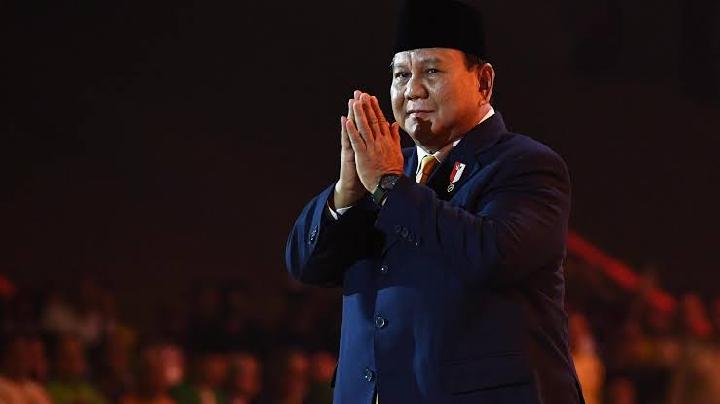
The Law Number 1 of 2026 concerning the Adjustment of Criminal Sanctions was signed and ratified by Prabowo in Jakarta on Friday, January 2, 2026.
Indonesia's AGO Says It Is Ready to Enforce the New KUHP and KUHAP
11 hari lalu
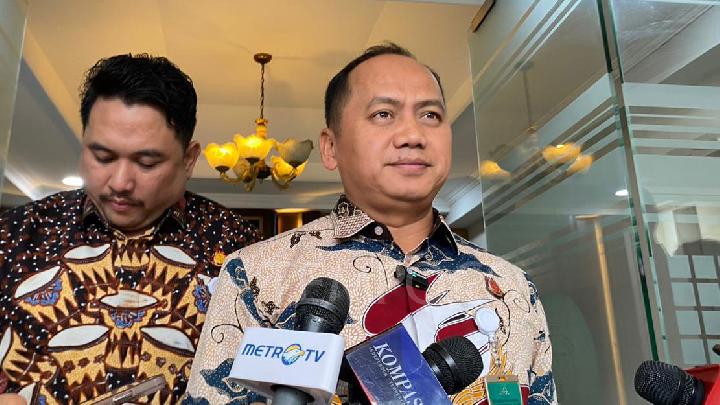
Indonesia began enforcing its new KUHP and KUHAP on January 2, 2026, with the Attorney General's Office saying it is ready to implement the changes.
A Look Back at the Problematic Conception of Indonesia's New Criminal Code
11 hari lalu
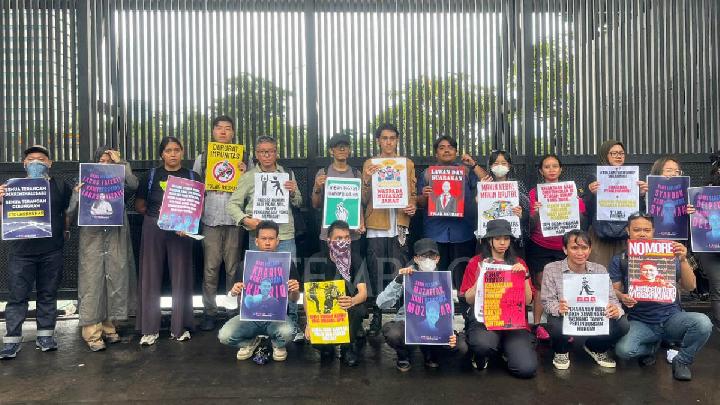
In its development, the Criminal Code and Criminal Procedure Code have been accompanied by various controversies.
Indonesia Proposes Converting Prison Sentences to Fines
48 hari lalu

The government proposes converting prison penalties into fines to align with the revised Criminal Code, which removes imprisonment for these offenses.
Raising One Piece Flag Cannot Be Prosecuted Under Current Laws: Legal Experts
9 Agustus 2025

The government says there are criminal consequences for anyone hoisting the One Piece flag. Meanwhile, legal experts argue that such action cannot be criminalized.
House Agrees with Indonesian Govt to Maintain Death Penalty in Criminal Code
13 April 2025

The clause in the Indonesian Penal Code opens the opportunity for death row convicts of death penalty to receive a life imprisonment sentence.
PPATK Reveals Online Gambling Deposits Hit Rp43 Trillion as of Q3 2024
3 Desember 2024

PPATK revealed that the total money circulating in online gambling activities in Indonesia reached Rp283 trillion as of the third quarter of 2024.
Jokowi Grateful for New Criminal Code, Job Creation Law
16 Agustus 2024

President Jokowi showcased the government's accomplishments during his speech at the MPR Annual Session on August 16, 2024.
KontraS Slams Indonesia's Lacking Answers in ICCPR's Human Rights Committee Session in Geneva
14 Maret 2024

KontraS regrets the Indonesian delegation's response to various human rights criticisms and questions from the ICCPR Committee in Geneva.