TEMPO.CO, Jakarta - Myanmar coup leader Min Aung Hlaing wrapped up a three-day state visit on Sunday to Vietnam, where the Southeast Asian neighbors vowed to boost defense and security ties.
There was nothing unusual about the trip itself, except that it marked the ex-general's sixth official trip abroad since assuming Myanmar's presidency in April, when he was voted in by a parliament stacked with loyalists following military-run elections in December and January that were widely considered a charade.
As Myanmar's newly minted head of state, Min Aung Hlaing has been hosted by the leaders of India, China, Laos, Thailand, Russia and now Vietnam — six countries in five months. He'll be heading to Cambodia on Friday to make it seven.
"Since the December-January elections and Min Aung Hlaing's transition to president after giving up his role as commander-in-chief, he's really put a renewed focus on diplomatic partnership and trying to shore up the government's allies in the region,” said Hunter Marston, head of the Southeast Asia Program at the Lowy Institute, a Sydney-based think tank.
"Even if they're relatively short trips to regional friends and allies, I think it shows that there is an acceleration of Naypyitaw's strategy to diversify its partnerships and to normalize relations bilaterally,” he added, referring to Myanmar's capital.
Human rights situation in Myanmar sinks to new low
Marston and other analysts told DW that Myanmar is slowly returning to the international stage, aiming to shed its pariah status despite the mountain of war crimes allegations leveled against the regime — some against Min Aung Hlaing himself.
Since Min Aung Hlaing's military toppled the democratically elected government of Nobel laureate Aung San Suu Kyi in 2021, civil war has killed some 100,000 people and displaced over 3 million.
Last month, the United Nations said human rights conditions in the country had sunk to a new low, as the military keeps up a campaign of forced recruitment, arson and often indiscriminate air strikes on contested and resistance-held areas.
That record has also made Myanmar one of the most heavily sanctioned countries in the world and brought on a number of court filings for genocide, war crimes and crimes against humanity at The Hague and elsewhere.
Despite that record, "the military regime is emerging to some extent from its isolation, but engagement is still largely limited to countries that were working with it to some extent prior to the recent sham elections," said Scot Marciel, a senior adviser at the consulting firm BowerGroupAsia.
"The military clearly hopes increased engagement will give it legitimacy that will help it cement its status, but it has not gained any legitimacy among the Myanmar public," Marciel, a former US ambassador to Myanmar, added.
Divisions in ASEAN over Myanmar
Even among its Southeast Asian neighbors, holdouts remain.
Since the coup, the 11-member Association of Southeast Asian Nations (ASEAN), of which Myanmar is one, has barred Min Aung Hlaing and his foreign ministers from attending the bloc's most senior-level meetings.
Malaysia, Indonesia and current ASEAN chair, the Philippines, are especially adamant that it stay that way until Myanmar makes meaningful progress on a peace plan for the country that all the members agreed to in April 2021.
Myanmar's regime has made little progress on the plan so far and rejected repeated requests for ASEAN's special envoys to the country to meet with Aung San Suu Kyi, who was arrested the morning of the coup and has been held in custody since.
Last month, the country's newly installed parliament passed a motion flatly rejecting the bloc's peace plan, and its Foreign Ministry said ASEAN's special envoys were no longer needed.
Under the circumstances, Min Aung Hlaing and his ministers are unlikely to be attending ASEAN's senior leaders summits "any time soon,” said Pinitbhand Paribatra, an associate professor of international relations at Thailand's Thammasat University.
Marston and Marciel, though, say there's a good chance ASEAN will welcome Myanmar fully back into the fold once Thailand assumes the bloc's rotating, one-year chairmanship in 2028.
With significant business and security interests in Myanmar and a shared border stretching over 2,400 kilometers, Thailand has been keen to placate the country's regime and to urge the rest of ASEAN to do the same.
Thailand's premier and foreign minister "have been very clear that they want to pursue calibrated engagement [with Myanmar] and that they have already seen sufficient progress to incentivize further engagement," said Marston.
Japan willing to restore normal ties?
Beyond China, Russia and Southeast Asia, Marston and Pinitbhand say Myanmar may also find countries to reengage with among Russia's authoritarian allies in Central Asia and elsewhere. Min Aung Hlaing made visits to Belarus even before he was president.
Among democratic countries, Pinitbhand said Japan was "more than ready" to restore normal relations with Myanmar.
"I don't think that Min Aung Hlaing will be traveling to Japan any time soon. But … there might be some other attempts from Japan to, for example, resume the relationship, because the Japanese private sector already has lots of investments and everything inside the country," he said.
Marciel pointed to both Japan and South Korea as countries that might start normalizing their relations with Myanmar in the next year or so.
Will the West reengage with Myanmar?
As for countries in the West, the analysts say they see little to no chance of them welcoming Min Aung Hlaing and his regime back onto the world stage or of lifting the heavy sanctions they have placed on them.
Pinitbhand says that's especially true if the International Criminal Court ultimately decides to issue the arrest warrant its former chief prosecutor had asked for against Min Aung Hlaing for crimes against humanity. A decision is still pending.
Marston says it's possible Washington would go for "calibrated reengagement" with Naypyitaw if it were to release Aung San Suu Kyi and follow up with other reforms, as the administration of former US President Barack Obama did when she was freed from house arrest in 2010.
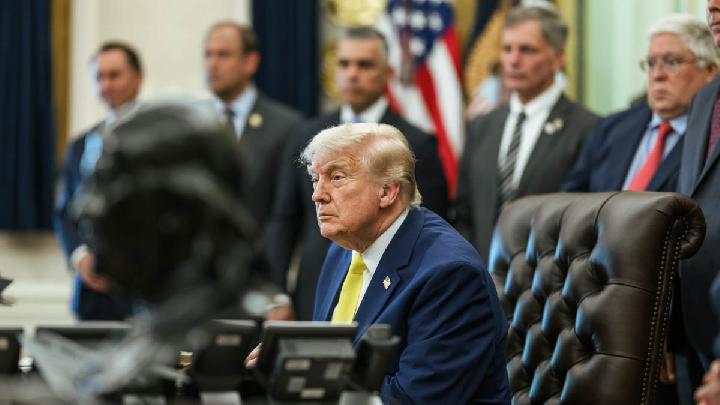
"But in this case, I don't think there are the leader-level engagements to begin to have that conversation between Naypyitaw and Washington, or the strategic interest within the Trump administration to do so," he said.
Marciel also said that Myanmar was low on the Trump administration's list of priorities. But with human rights also low on that list, he added, there was a chance it would warm to the regime for the right commercial or economic opportunities.
On the whole, though, the former ambassador says the West won't be embracing Min Aung Hlaing and his regime for now.
"I don't see any movement to ease sanctions among the Western countries that maintain them, as they all see the recent elections as a sham and also do not give much priority to Myanmar matters in their foreign policy," he said. "Things could change, but that is how it looks for now."
Read: Myanmar President Visits Thailand Seeking Political Legitimacy
Click here to get the latest news updates from Tempo on Google News