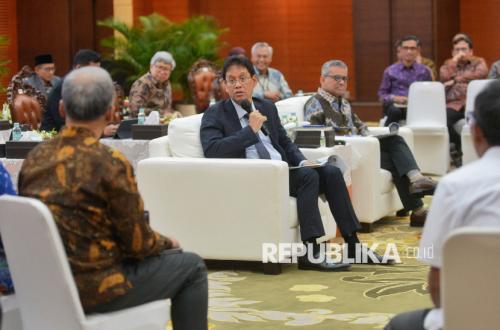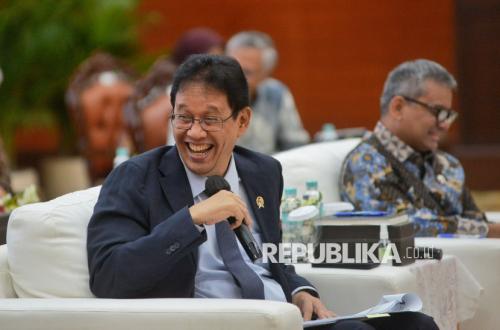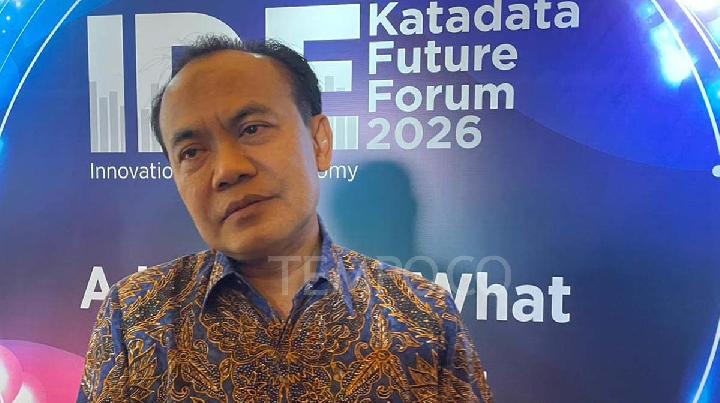
TEMPO.CO, Jakarta - The Indonesian Ministry of Higher Education, Science, and Technology (Kemendikti) plans to close various study programs deemed irrelevant to future economic growth industries. This plan was conveyed by the Secretary General of Kemendikti Badri Munir Sukoco at the National Symposium on Population in 2026 in Badung, Bali, on Thursday, April 23, 2026.
Badri said this plan will be executed soon. Then, he asked the universities to voluntarily select which programs of study needed to be closed.
"Later, there might be some that we need to close in the not-so-distant future related to programs that need to be selected, sorted, and, if necessary, closed to improve relevance," said Badri Munir Sukoco, as quoted from the Ministry of Population and Family Development's Youtube broadcast.
Budi explained that this step is taken to bridge the gap between the competencies of university graduates and those needed by the workforce. The Higher Education Ministry notes that universities produce up to 1.9 million bachelor's degrees every year. However, according to Budi, these graduates have difficulty finding jobs because the demands of the field do not align with their education.
Therefore, the government plans to reduce this gap by closing irrelevant study programs and focusing on those that integrate with the industrial world. Some of these include energy, agriculture, health, defense, maritime, downstream processing, digitalization, and advanced manufacturing. "Actually, what's needed in the future are which study programs, which we will try to outline together later," said Budi.
According to him, the high gap between graduates and industry needs is caused by numerous universities often opening study programs based on market demand without considering their relevance to the workforce. For example, Badri mentioned an oversupply of graduates from social sciences and education programs.
Teaching or education, for instance, has 490,000 graduates every year, while the need for potential teachers is only 20,000. Consequently, the surplus of graduates who are not absorbed becomes educated unemployed. "As a result, there's oversupply. I can also check, for example, in 2028, we actually have an oversupply of doctors. If this is allowed to continue, especially with uneven distribution, an imbalance of distribution in each region," said Badri.
Budi emphasized that Indonesia's demographic bonus must be accompanied by greater relevance of higher education. Based on this, Budi invited universities, particularly those in the Consortium of Universities for Population Concern (Konsorsium PTKP), to assist the government in determining which study programs are still relevant.
"The adapted study programs, the need to develop new programs in line with the eight strategic industries, of course, there needs to be willingness from each rector to conduct studies to ensure the programs are relevant," he said.
Read: Why STEM Learning Is Crucial for Today's Students
Click here to get the latest news updates from Tempo on Google News