TEMPO.CO, Jakarta - The implementation of the European Union's zero-deforestation trade regulation, the European Union Deforestation Regulation (EUDR), has major implications for agricultural commodities, including coffee. Indonesian coffee producers must implement the traceability system mandated by the new trade rules to remain competitive in global markets.
The regulation will take effect on December 30, 2026, for large and medium-sized operators and traders, while micro and small enterprises will be subject to the rules starting June 30, 2027. Businesses are required to ensure that every coffee batch marketed can be traced to its origin and is verified as free from deforested land.
"Implementing traceability is no longer just an option, but a necessity for the future of the Indonesian coffee industry," said Samedi, Program Director of the Tropical Forest Conservation Action for Sumatra (TFCA-Sumatera) at the Kehati Foundation, in a written statement distributed on Wednesday, August 5, 2026.
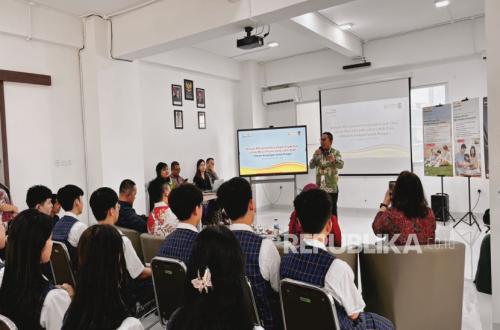
Samedi delivered the remarks while opening the fourth episode of the webinar series "Taste of Conservation: Blending Coffee, Profit, and Forest Sustainability," titled "Product Traceability," on the same day.
During the session, organized by Kehati in collaboration with the Sustainable Coffee Platform of Indonesia (SCOPI), Samedi underscored the vital role of tracking mechanisms. "Because besides ensuring land legality, there are also several other factors related to traceability, such as coffee quality and farmer welfare," he noted.
He expressed hope that more industry players will recognize that supply chain verification is not merely an international compliance exercise, but a long-term investment for domestic producers. "With a strong traceability system, Indonesian coffee can increase its competitiveness in the global market while ensuring environmentally responsible production practices and supporting farmer welfare."
Java Kirana Founder Noverian Aditya noted that the EUDR framework is not designed to burden smallholders, but rather functions as a collaborative effort to ensure coffee production does not drive forest loss. However, he acknowledged that operationalizing these standards on the ground is not easy.
"The challenge is that farmers cannot yet view the EUDR from a buyer's perspective, because for them, even meeting their daily needs remains a challenge," Noverian stated during the panel.
He explained that Java Kirana operates as an ecosystem enabler, guiding smallholders through evolving commercial mandates. This support involves mapping conditions at the farm level, assessing needs, and designing steps to help growers satisfy sustainability criteria and access expanded markets.
Ainu Rofiq, Co-Founder and Board Member of Koltiva, outlined how deploying digital systems and geolocation verification can solidify product origin records for Indonesian coffee, thereby opening doors to international buyers.
Ainu explained that embedding traceability yields both internal and external commercial advantages. Internally, it helps preserve product consistency through enhanced quality control. Externally, the mechanism is a crucial tool for satisfying regulatory compliance while fulfilling shifting consumer expectations.
"Market access is increasingly valuing single-origin and specialty coffee," he stated during the event. To support this, he stressed the necessity of platforms capable of certifying product origins. "So traceability is crucial."
Bryant Hartanto of the Pundi Sumatera–Telapak Consortium presented the traceability model that TFCA-Sumatra partners will deploy under Grant Cycle X. The initiative aims to strengthen sustainable supply chain governance, reinforce forest conservation, increase market access, and generate value-added returns for smallholders.
"Traceability isn't just about rows of numbers on a computer screen or QR codes on coffee packaging; it's a tool for telling the world honestly, a story about the sweat and tears of farmers tending their coffee plants on the mountain slopes," he reflected.
Meanwhile, Doris Monica Sari Turnip, Senior Agricultural Product Quality Supervisor at the Directorate General of Plantations, Ministry of Agriculture, detailed policy initiatives designed to support commodity tracing. Chief among these is the Cultivation Registration Certificate (STDB), which serves to verify land legality while upholding sustainability principles.
According to Doris, the government continues to accelerate the expansion of the STDB database, including opening doors for external collaboration. She noted that development partners, processors, and commercial buyers can now participate directly in mapping and collecting farm data to expedite STDB issuance.
"The government's acceleration is by allowing parties outside the government to carry out the STDB data collection and mapping stages. This step is expected to accelerate the increase in the amount of STDB data for coffee commodities," Doris stated.
TFCA-Sumatra and SCOPI recorded over 100 participants attending the session both in person and virtually from various regions. The webinar examined the multifaceted practical challenges of tracing coffee in the field, covering regulatory compliance, data digitization, geolocation verification, and the overall readiness of farmers and exporters to meet international market demands, with the discussion moderated by active coffee influencer Sophia Mega.
Read: Indonesia Not Ready for EU Deforestation Rules, Says GAPMMI
Click here to get the latest news updates from Tempo on Google News