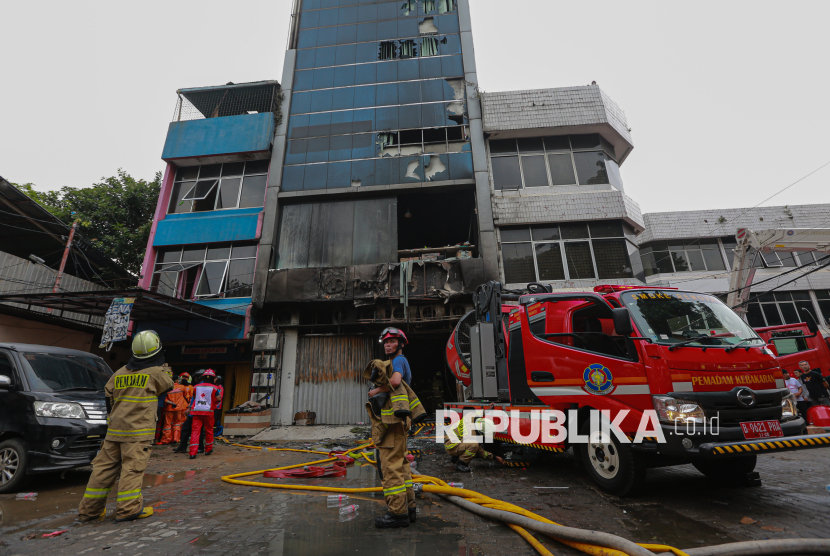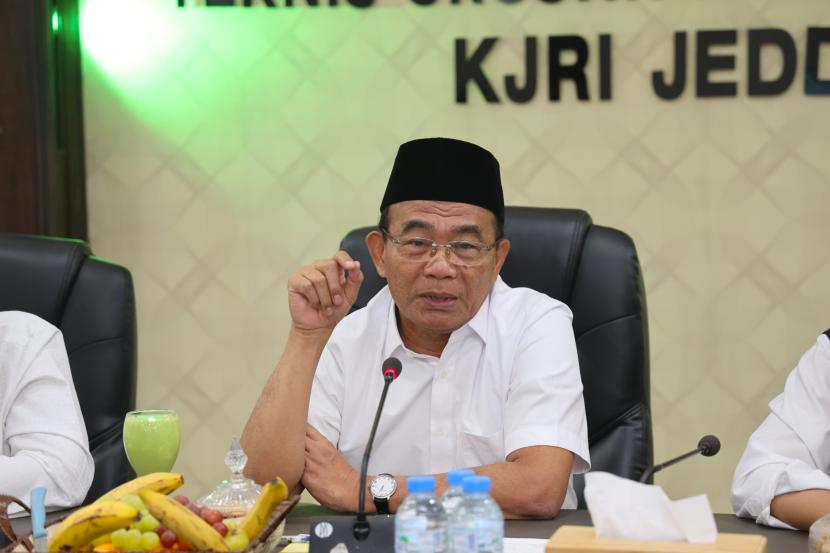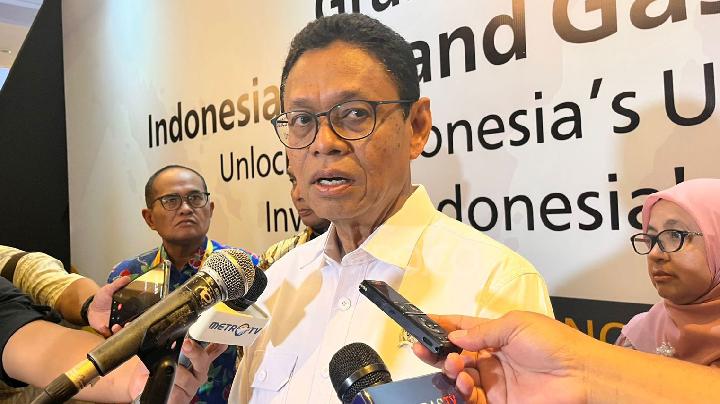
TEMPO.CO, Jakarta - The Chair of House Commission I (DPR), Utut Adianto, proposed that the government should establish a ministry dedicated to integrated disaster management. The politician from the Indonesian Democratic Party of Struggle (PDIP) proposed the formation of a disaster ministry during a working meeting with the Minister of Communication and Digital, Meutya Hafid, on Monday, December 8.
Professor of Government Science at the Institute of Domestic Government, Djohermansyah Djohan, stated that, given the current situation of extreme weather exacerbated by the climate crisis, the proposal to form a disaster ministry is permissible.
"However, the issue is not about the status of the ministry, agency, or institution. It is about coordination," said Djohan when contacted on Friday, December 12, 2025.
He explained that Indonesia already has an agency responsible for disaster management, though it is not ministerial. The agency in question is the National Disaster Management Agency (BNPB) at the national level, and regional disaster management agencies (BPBD).
Therefore, he said, BNPB serves as an agency equivalent to a ministry or institution with the authority for disaster management as mandated by Law Number 24 of 2007 concerning Disaster Management. "The problem is, the budget cuts to BNPB have rendered the agency unable to operate extensively," said Djohan.
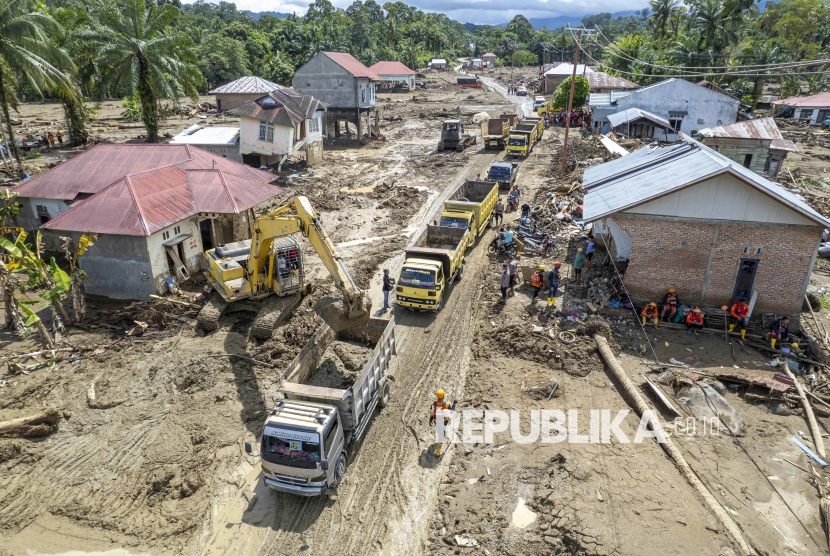
Ecological disasters have struck several regions in Indonesia since November 25. Aceh, North Sumatra, and West Sumatra remain areas currently in a state of emergency for disaster management. However, the government has not yet declared a national disaster emergency status for ecological disasters in these three provinces.
As of Thursday, December 11, the BNPB's geoportal dashboard for flood and landslide emergency management in these three provinces recorded a total of 990 casualties: 407 in Aceh, 343 in North Sumatra, and 240 in West Sumatra.
Yance Arizona, a constitutional law lecturer at Gadjah Mada University, believes the proposal for a disaster ministry is irrelevant to fiscal matters and ongoing disaster management efforts. He stated that creating a new institution would only lead to overlapping authorities.
According to him, instead of establishing a new institution, to alleviate the state's fiscal burden, the government could merge or dissolve the BNPB. He cited the merger of the National Land Agency into the Ministry of Agrarian and Spatial Planning as an example. "The current cabinet is already bloated, so there is no need to add a new agency," said Yance.
Furthermore, Yance stated that if the proposal to form a disaster ministry is based on integrating disaster management and optimizing the budget, the government should demonstrate this by temporarily halting policies that are not of immediate urgency. "The MBG (free nutritious meal) program at the moment, I believe, does not have an urgent necessity," he said.
Yance argued that the temporary cessation and allocation of the MBG program's budget for emergency disaster management are more necessary than discussing the proposal for forming a disaster ministry. "The MBG budget is sufficient to assist regions in rehabilitating infrastructure and residents' homes amid the shortage of funds due to reduced transfers to regions," he added.
The Center of Economic and Law Studies (CELIOS) recorded that the national budget for disaster management agencies is at its lowest level in the past 15 years. For example, in the 2026 State Budget, the BNPB has a budget of only Rp491 billion, whereas the Meteorology, Climatology, and Geophysics Agency (BMKG) has Rp2.6 trillion.
Director of Public Policy at CELIOS Media, Wahyu Askar, stated that the minimal budget allotted to disaster management agencies potentially impedes disaster response, as was the case in Sumatra. "This condition becomes more problematic as the regions also experience a reduction in regional incentive funds," said Askar.
According to Askar, amid geographical conditions and the climate crisis, Indonesia should prioritize budget allocation for programs that are not of immediate urgency, particularly the MBG program. The MBG program has a budget of Rp335 trillion this year. "Logically, this is nonsensical because the disaster management budget is being cut, while the budget for programs that are unnecessary is increasing," he commented.
Utut Adianto stated that the proposal to form a disaster ministry was made to strengthen disaster management budgets. He demonstrated that Central Java VII, the area he represents, is prone to potential disasters. "While the state budget is not sufficient, funds are only disbursed when an event occurs," he said.
According to Utut, due to its location within the Pacific Ring of Fire, Indonesia is highly susceptible to disasters at any time, so a dedicated disaster ministry needs to be established. Taking this into consideration, he believes that establishing a disaster ministry is urgent.
Read: West Sumatra Residents Move to File Citizen Lawsuit Against President, 11 Others
Click here to get the latest news updates from Tempo on Google News