
December 26, 2025 | 07:00 pm
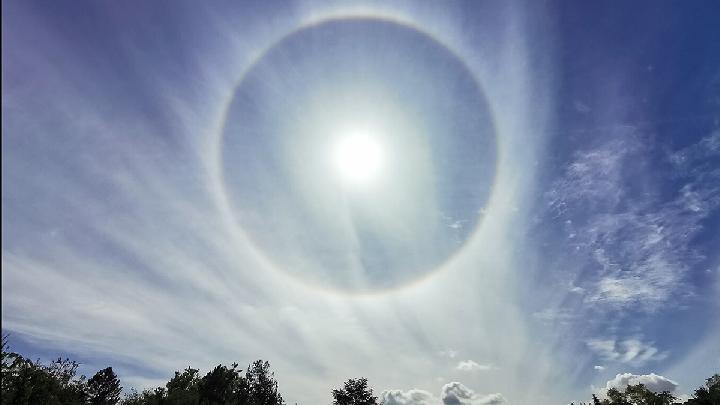
TEMPO.CO, Jakarta - An astronaut aboard the International Space Station (ISS) has captured a rare optical phenomenon known as a lunar halo while orbiting above the Indian Ocean. The striking image shows a thin, glowing arc suspended above the blue edge of Earth, appearing almost detached from the planet.
According to Earth Observatory on December 25, 2025, the phenomenon occurred when moonlight was refracted by ice crystals in the uppermost layers of Earth’s atmosphere, where the air is extremely thin.
How the Lunar Halo Formed
From the ISS’s low-Earth orbit, the viewing geometry placed the Moon directly behind Earth’s atmosphere along the astronaut’s line of sight. This alignment caused the atmosphere to act like a natural lens, bending and spreading moonlight into a luminous arc.
The ISS orbits at an altitude of more than 200 miles (around 320 kilometers). Under certain conditions, this vantage point allows astronauts to observe atmospheric optical effects that are difficult or impossible to see from the ground.
The photograph clearly reveals multiple layers of Earth’s atmosphere. Closest to the surface is the orange-tinted troposphere, followed by the pale white stratosphere and the deep blue upper atmosphere. Above these layers lies the mesosphere, an extremely cold region located about 30 to 54 miles (50 to 85 kilometers) above Earth.
It is within this upper region that rare atmospheric ice can form, an essential ingredient in creating a lunar halo.
Why Only an Arc Appears
Typically, a lunar halo appears as a complete ring about 22 degrees around the Moon. However, in this image, only a partial arc is visible. Scientists explain that the ice crystals responsible for refracting the light did not fully surround the Moon from the ISS’s perspective.
The shape and orientation of the ice crystals, often plate-like or hexagonal columns, play a crucial role. Even small changes in their alignment can result in partial halos rather than full circles.
Rare Ice at Extreme Altitudes
Ice at such high altitudes is uncommon. Recent studies indicate that the highest ice layers in Earth’s atmosphere tend to form during the coldest summer conditions, roughly 50 miles above the surface. These layers are highly sensitive to subtle temperature shifts and atmospheric gravity waves generated by storms and terrain below.
Satellite observations have shown that these glowing ice formations are closely linked to processes in the lower atmosphere, helping explain why the halo appears near the top of the blue atmospheric layer rather than within typical cloud formations.
The Moon’s Illusion of Fullness
At the time the image was taken, the Moon was actually in a young crescent phase. However, camera exposure settings made the entire lunar disk appear bright. This effect was enhanced by earthshine, which is sunlight reflected from Earth onto the Moon’s darker side, making the Moon appear fuller than it truly was.
NASA says the image highlights the scientific importance of astronaut photography. Unlike automated sensors, astronauts can capture fleeting visual phenomena and provide direct insights into how light, weather, and atmospheric chemistry interact on a planetary scale.
The lunar halo image serves both as a scientific observation and a vivid reminder of the complex and delicate dynamics shaping Earth’s atmosphere.
Read: How Is Indonesia Preparing for Potential Extreme Weather?
Click here to get the latest news updates from Tempo on Google News
NASA Continues Preparations for Artemis II Mission to the Moon Amid US Federal Gov't Shutdown
53 hari lalu

So far, NASA's crucial operation continues, but officials and contractors warn that its impact could soon be significant.
Axiom-4 Astronauts Successfully Reach Space Station in Dragon Capsule
26 Juni 2025
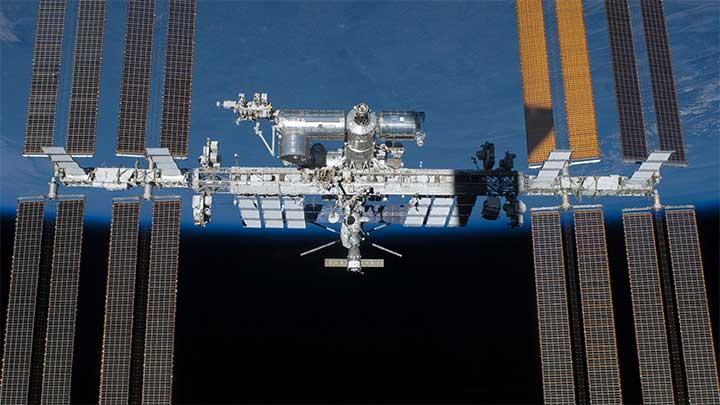
The number of research brought by the astronauts to ISS this time is much higher compared to previous Axiom private missions.
Moving Forward: NASA Astronauts Embrace Next Starliner Flight Despite Past Hiccups
8 April 2025

The astronauts are not deterred even after stranded at International Space Station (ISS) for 9 months. What are NASA's next plans for Starliner?
NASA Astronaut's 10-Day Mission Becomes a 9-Month Odyssey, Reunites with Family
19 Maret 2025

NASA astronaut Sunita Williams has accumulated a total of 608 days in space over the course of three flights.
'Stranded' ISS Astronauts Set to Return to Earth Today
18 Maret 2025
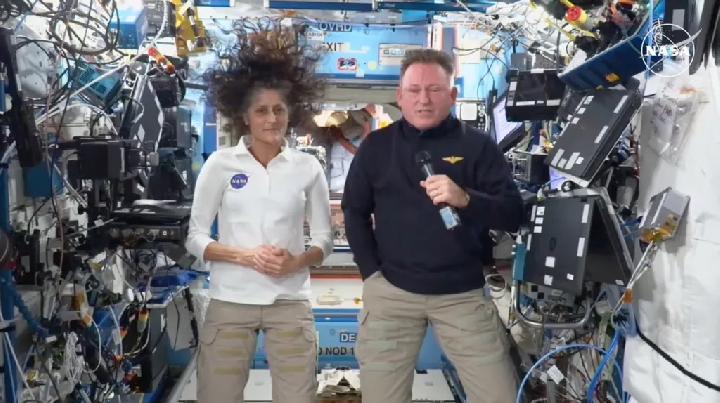
The schedule for their return, and two other astronauts, from ISS has been advanced by one day. They departed using Starliner-Boeing, and will return using Dragon-SpaceX.
SpaceX Capsule Crew Docks with Space Station to Replace Astronauts 'Butch and Suni'
17 Maret 2025
A SpaceX capsule delivered four astronauts to the International Space Station early on Sunday to rescue two stranded astronauts.
NASA, SpaceX Delay Mission to Retrieve Stranded Astronauts
13 Maret 2025
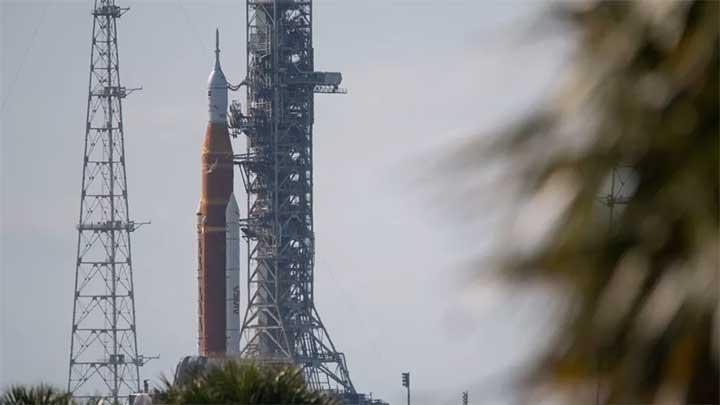
NASA and SpaceX postpone the Crew-10 mission launch, resulting in the delayed repatriation of two astronauts from the ISS.