December 2, 2025 | 01:49 pm
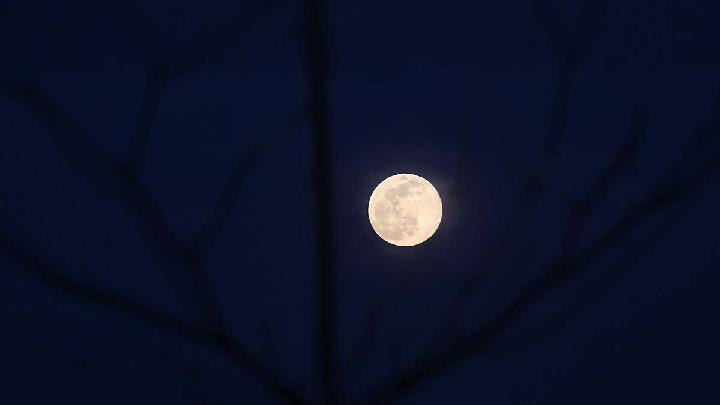
TEMPO.CO, Jakarta - The night sky in the final month of 2025 offers several celestial events visible to the public. Avivah Yamani, an astronomy enthusiast from the Southern Sky community, highlighted key phenomena, including the Geminid meteor shower and a Supermoon on December 5.
“There will be a full moon at perigee coinciding with the occultation of the star beta Tauri by the Moon,” she said in Bandung on Monday, December 1, 2025.
The Moon will reach its closest distance to Earth, or perigee, at 356,963 kilometers on December 4. A day later, a full moon, known as a Supermoon, will be visible from sunset until dawn.
During this event, the Moon will appear to pass closely in front of the star beta Tauri, also called Elnath, temporarily blocking it from view.
Observers across Indonesia, except for parts of Sumatra, can witness this occultation. Elnath will generally be hidden from 07:54 PM WIB to 10:07 PM WIB. In Bandung, the star will disappear behind the Moon from 07:54 PM WIB until 08:51 PM WIB.
Moon and Jupiter Alignment
On the night of December 7, the Moon will appear near the planet Jupiter from midnight until dawn. In Bandung, the Moon will rise at 08:35 PM WIB, followed by Jupiter just two minutes later.
Several meteor showers will also be active in December.
Phoenicid Meteor Shower: Active from November 28 to December 9, with its peak on December 2. The meteors appear to originate from the Phoenix constellation in the southern sky, producing around 12 meteors per hour from sunset until about 3:00 AM WIB.
Puppid-Velids Meteor Shower: Runs from December 1 to 15, peaking on December 7. Observers can see approximately 10 meteors per hour in the southeastern sky. Observation starts at 8:26 PM WIB, when the Puppis constellation rises, and continues until dawn.
Geminid Meteor Shower: Occurs from December 4 to 20, peaking on December 14. This is one of the most prominent meteor showers of the year, with up to 150 meteors per hour streaking across the northeastern sky. The meteors emerge from the Gemini constellation, which rises around 8:00 PM WIB.
Ursid Meteor Shower: Takes place from December 13 to 24, originating from the Ursa Minor constellation. This meteor shower is mainly visible in the Northern Hemisphere. In the Southern Hemisphere, Ursa Minor rises near sunrise, making the phenomenon difficult to observe.
Editor’s Choice: BMKG Says It Warned Sumatra Authorities About Tropical Cyclone Senyar 8 Days in Advance
Click here to get the latest news updates from Tempo on Google News
7 Facts About the Viral Meteor Phenomenon Over Indonesia's Cirebon
56 hari lalu
A BRIN researcher concluded that the celestial object was a fairly large meteor that crossed the Kuningan-Cirebon Regency
BRIN Astronomer Confirms Meteor Fall Following Booming Sound in Cirebon
57 hari lalu
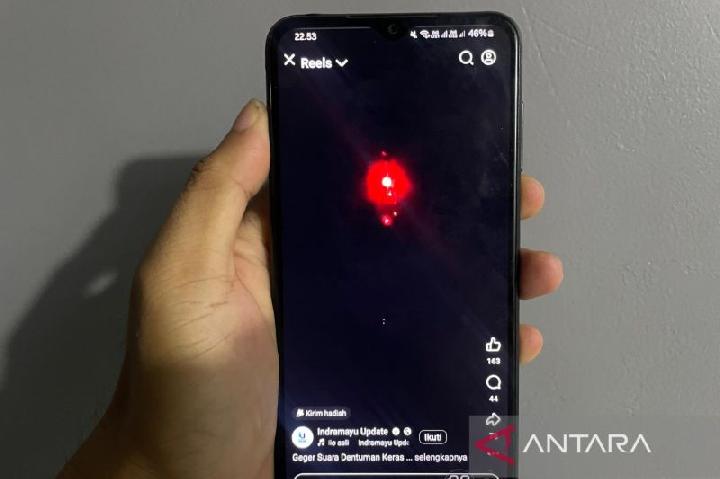
A viral video on social media shows the alleged meteor falling in Cirebon, West Java on Sunday night, October 5, 2025.
Meteor Rains to Appear on Indonesian Sky Mid-April
7 April 2021

The meteor showers can be witnessed from within the Indonesian territory.
Loud Boom in Bali's Buleleng Allegedly due to Exploding Meteor
25 Januari 2021

Residents in Buleleng, Bali, and its surrounding areas were shocked by a loud boom on Sunday morning, January 24.