
September 18, 2026 | 10:59 am

TEMPO.CO, Jakarta - Scientists analyzing data from NASA’s Lunar Reconnaissance Orbiter (LRO) have discovered a massive newly formed crater on the Moon, which is the largest new impact feature identified in the solar system to date.
The feature, officially named McGetchin crater in honor of late lunar scientist Tom McGetchin, spans 728 feet (222 meters) in width and reaches a depth of 141 feet (43 meters). According to findings published by NASA on September 16, 2026, in the journal Science Advances, an impact of this scale is estimated to occur on the lunar surface only once every 100 to 132 years.
Discovery in the Data
According to NASA, the crater formed between April 11 and May 22, 2024, when a comet fragment or asteroid roughly the size of a three- to six-story building slammed into the Moon's eastern edge. However, as reported by Sky News, the collision escaped real-time detection by Earth-based and space telescopes.
The discovery occurred during routine image processing in October 2025 by Robert Wagner, an image-processing specialist from Intuitive Machines working with the Lunar Reconnaissance Orbiter Camera (LROC) team. While scanning global lunar maps generated by LROC’s Wide-Angle Camera, Wagner noticed a prominent bright patch surrounded by a dark halo, an indicator that surface material had been violently churned up.
"I just stopped, dropped everything, and started looking into what that spot was," Wagner said in a statement released by NASA. He noted that the feature stood out immediately compared to typical surface changes. "It was by far the most obvious impact debris pattern I’ve ever seen in one of these images."
Follow-up observations using LROC’s high-resolution Narrow-Angle Camera confirmed the crater's dimensions which spans the length of two football fields and deep enough to submerge three vertically stacked school buses. The feature is three times larger than the previous record-holder identified by the LRO team a decade ago.
 The view from the side (55" away from straight down) towards the east, covers an area of the Moon that's about 1.5 miles wide. It was taken by NASA's Lunar Reconnaissance Orbiter Narrow-Angle Camera on March 3, 2026. Doc. NASA
Surface Disturbance and the "Cold Spot" Phenomenon
According to LRO camera chief scientist and lead study author Mark Robinson, the impact blasted rock and dust across a radius exceeding 66 miles (100 kilometers).
Beyond the physical debris field, a secondary study published in Science Advances and led by researcher Tyler Powell revealed a broader thermal anomaly surrounding the impact site.
Data from LRO’s thermal instrument, Diviner, identified a 4.3-mile-wide (7-kilometer-wide) "cold spot" encircling the crater. During the lunar night, this region registered temperatures 14 to 16 degrees Fahrenheit (8 to 9 Kelvin) colder than adjacent terrain.
As cited by Space.com, Powell explained that the force of the collision loosened and "fluffed up" the top layer of lunar soil (regolith), reducing its density and capacity to retain heat.
"McGetchin crater is exceptional because it is the largest newly formed impact crater that has been identified to date. A crater of this size is expected to form on the moon only once per century, so we're extremely lucky it formed during the lifetime of the LRO mission," Powell explained.
Implications for Future Lunar Missions
The discovery carries practical importance as space agencies, led by NASA, prepare for crewed landings and long-term infrastructure deployment near the lunar south pole. LRO camera chief scientist Mark Robinson noted that ejecta patterns show the top inch of lunar soil is turned over every 80,000 years, which is much faster than previously calculated.
Consequently, historical artifacts such as the footprints left by Apollo astronauts will eventually be erased by continuous micrometeorite impacts over geological time, Robinson said as reported by Sky News.
Additionally, understanding how large impacts alter the mechanical properties of regolith is crucial for designing surface equipment. Fluffed-up regolith in cold spots could affect rover traction and landed structures.
"Observations from the surface would be really valuable because they would allow us to correlate what we see and map from orbit with small-scale changes to surface texture," Powell noted, suggesting McGetchin crater could serve as a high-value target for future rover or astronaut exploration.
Read: Mount Anak Krakatau Growth Rapid but Safe, Says PVMBG
Click here to get the latest news updates from Tempo on Google News
Asteroid 2026 JH2: No Need to Worry About It Hitting Earth
16 Mei 2026

This big asteroid was discovered shortly before it was expected to hurtle past Earth.
April 2026 Night Sky Events: Pink Moon, Lyrid Meteor Shower, and More
1 April 2026
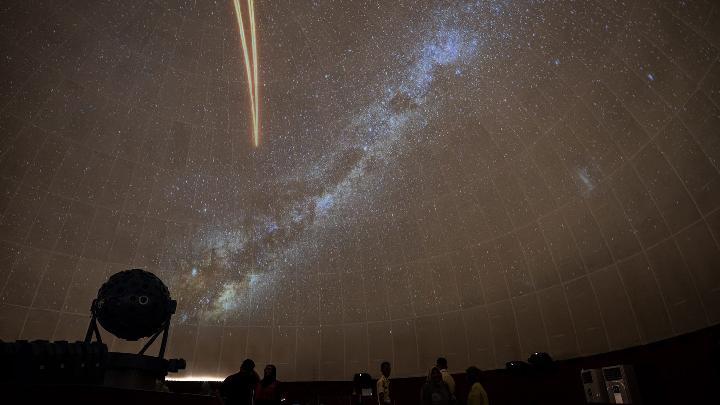
Throughout April, with observation tools, the public can witness the conjunction of planets, meteor showers, and even the passage of an asteroid.
'City-Killer' Asteroid 2024 YR4 Won't Hit Earth or Moon in 2032, Says NASA
6 Maret 2026

Recent observation using the James Webb Space Telescope confirms that the citykiller asteroid 2024 YR4 will not collide with Earth or the Moon as it passes by in 2032.
IAU Names Asteroid After Indonesian Scientist Bayu Risanto
16 Januari 2026

This international recognition honors Indonesian Jesuit priest and scientist Bayu Risanto's contributions to meteorology and atmospheric science.
Meet 2025 PN7, the Tiny Asteroid Traveling with Earth Like a Second Moon
24 Oktober 2025

Asteroid 2025 PN7, which was recently discovered, turns out to be a quasi-moon, an object that orbits close to the Earth. It is expected to stay until 2083.
China Gears Up for Tianwen-2 Mission to Asteroid and Comet
26 Mei 2025
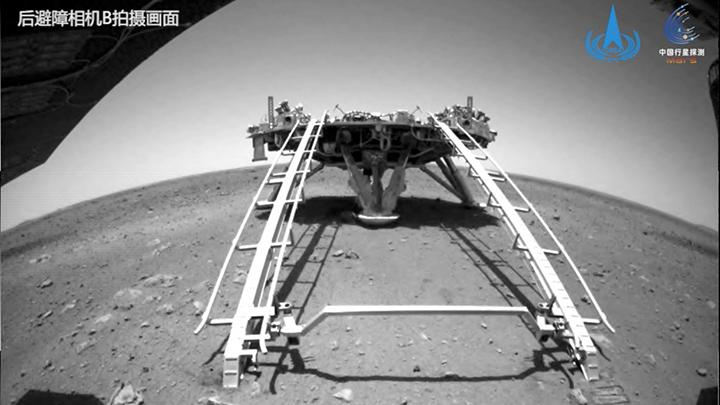
The success of China's Tianwen-1, which sent the Zhurong rover to Mars, paved the way for Tianwen-2 and future missions, such as Tianwen-3 and 4
Trump Cuts NASA Budget, US House Worries About Asteroid Strike
19 Mei 2025

The US House Committee on Space, Science, and Technology has expressed concerns over President Donald Trump's plan to cut the budget for the National Aeronautics and Space Administration (NASA) by up to 24 percent.
Scientists: Asteroid 2024 YR4 Has the Potential to Collide with the Moon, Not Earth
18 Februari 2025
If this asteroid were to collide with the moon, the impact would likely be clearly visible from Earth, although we would not be directly affected.
What is a Mini-Moon? Earth's Mysterious Visitor to Orbit This September
23 September 2024
Earth is set to host a new mini-moon at the end of this September. Read on to explore the details of this rare celestial phenomenon.
Asteroid That Doomed the Dinosaurs Originated Beyond Jupiter
17 Agustus 2024

An asteroid slammed into the Earth 66 million years ago eradicating about three-quarters of the world's species and ending the age of dinosaurs.